
Create an SEO-Friendly Blog Website: Step-by-Step Guide
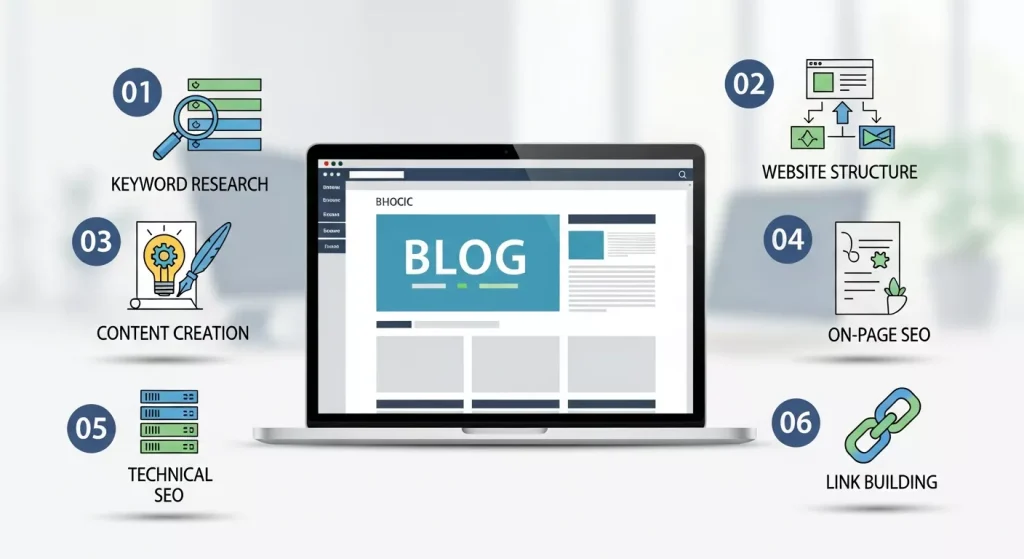
Building an SEO-ready Blog Website is less about flashy design and more about clarity, structure, and trust. When every page serves a purpose, search engines understand the site faster, and readers feel confident staying longer, exploring more, and returning again.
A strong Blog Website does not happen by accident. It starts with a clear purpose, a simple structure, and content that matches what readers actually want. Many beginners think the hardest part is writing articles, but the real advantage comes from setting up the Blog Website the right way from the beginning.
If you are searching for how to create an SEO friendly blog website step by step, the answer begins with a clear audience, a focused structure, and a publishing plan that supports long-term trust.
When a Blog Website is organized well, search engines can crawl it more easily, users can navigate it without friction, and every post has a better chance of ranking. That is why the process should be treated as a system, not just a design task. A good Blog Website supports discovery, builds authority, and keeps people engaged long enough to trust your message.
The goal is not to make the site look busy. The goal is to make it useful. Visitors should immediately understand what the site is about, where to go next, and why they should stay. That is how a Blog Website earns traffic instead of waiting for it.
Why the structure matters before anything else

Before choosing colors, fonts, or plugins, decide how the Blog Website will be organized. Search engines and human readers both prefer order. If a Blog Website has too many random categories, unclear menus, or pages with no purpose, it becomes harder to index and harder to trust.
A clean structure helps the Blog Website communicate relevance. Each category should support a larger topic. Each post should belong to a meaningful section. Each internal link should help users move naturally from one idea to another. This is how a Blog Website begins to build topical authority.
You should think of the site as a map. The homepage points to main categories. Categories point to useful articles. Articles point to related resources. When the Blog Website follows that flow, both readers and search engines can understand it with less effort.
Step 1: Choose a niche that has real demand
A Blog Website works best when it focuses on a specific audience and a specific promise. General websites often struggle because they try to speak to everyone. A focused Blog Website, on the other hand, creates a stronger identity and attracts readers who care about the same subject.
Your niche should sit at the intersection of interest, knowledge, and search demand. If a topic has no audience, the Blog Website will struggle. If the topic is too broad, the Blog Website may feel unfocused. The best choice usually lives in the middle, where you can build depth without becoming repetitive.
A niche also helps the Blog Website grow faster because every new article reinforces the same theme. That consistency makes it easier for search engines to see what the site is about. Over time, a focused Blog Website can become a trusted resource instead of a collection of unrelated posts.
Step 2: Plan the content pillars
A Blog Website needs content pillars, not just random ideas. Content pillars are the main subject groups that shape the entire site. They help the Blog Website stay organized, and they make planning much easier. For example, if your site is about productivity, your pillars might include planning, time management, tools, and routines.
Once the pillars are defined, every article should connect back to one of them. That way, the Blog Website develops a clear content ecosystem. Readers can move from one related post to another, and search engines can better understand the depth of your coverage.
This is also where keyword research becomes practical. You are not just collecting phrases; you are mapping topics to user intent. A well-planned Blog Website reflects how people search, what they need, and how they progress from beginner questions to more advanced ones.
Step 3: Choose a platform that supports growth
The platform you choose will shape how flexible the Blog Website can be in the future. Many beginners prefer WordPress because it offers control, scalability, and a large ecosystem of tools. Other platforms may be simpler, but they often limit customization or SEO control.
A good platform should make it easy to update content, manage categories, optimize metadata, and improve technical performance. The Blog Website should never feel locked down. If you cannot easily edit titles, URLs, headings, or image settings, ranking becomes harder than it should be.
As your site grows, the Blog Website may need new features such as schema support, caching, speed optimization, or integration with analytics tools. A platform that supports these changes saves time later and prevents rebuilding the site from scratch.
Why WordPress is still popular
WordPress remains popular because it gives control without forcing you to code everything manually. For many creators, the step by step guide to start a blog website in WordPress is attractive because it combines flexibility with familiar publishing tools. That matters when the Blog Website must grow steadily over months and years.
Step 4: Design for humans first
A pretty design is nice, but a usable design is better. A Blog Website should make reading easy, not difficult. Visitors should not have to fight against clutter, tiny text, slow loading, or confusing navigation. The cleaner the layout, the longer people stay.
Good design also affects trust. If the Blog Website looks outdated or inconsistent, visitors may leave before they read a single sentence. A professional layout, enough whitespace, clear typography, and simple menus create confidence. That confidence matters because people tend to trust sites that feel deliberate.
The best designs reduce effort. Readers should be able to scan headings, find related articles, and move through the site without thinking too hard. When design feels effortless, the content gets more attention.
A practical step how to design a blog website that ranks on Google is to keep the layout simple, the hierarchy clear, and the navigation easy to scan.
Step 5: Build a clear navigation system
Navigation is one of the most important parts of a Blog Website because it controls how users explore. A strong menu should highlight the main topics without overwhelming the visitor. If the navigation is too crowded, the Blog Website can feel confusing and less focused.
The homepage should guide people toward the most important categories. Category pages should act like topic hubs. Related post sections should connect deeper content. When these pieces work together, the Blog Website becomes easier to use and easier to crawl.
Search engines notice this structure too. A site that links internally with purpose helps distribute authority across pages. That makes the Blog Website stronger overall, instead of relying on only one or two posts to carry all the traffic.
Step 6: Write content that answers real questions
A Blog Website grows when it solves problems clearly. Readers usually arrive with a question, a concern, or a goal. The content should match that expectation. If the title promises a tutorial, the article should teach. If the title promises a comparison, the article should compare. If the title promises a guide, the article should guide.
This is why intent matters so much. A Blog Website should not just chase keywords. It should answer the searcher’s actual reason for looking. When the content and the intent line up, engagement improves and bounce rates usually fall.
Every article should aim to be complete enough to satisfy the reader without making them search again immediately. That is one of the strongest signals a Blog Website can send.
Step 7: Use SEO foundations on every page
The technical basics are simple, but they matter a lot. Every page on the site should have a unique title tag, a clear meta description, a readable URL, and a logical heading structure. These elements help search engines interpret the content and help users decide whether to click.
Images should have descriptive alt text. Internal links should point to relevant pages. URLs should stay short and meaningful. Each page should have one clear topic. When the Blog Website follows these habits consistently, small improvements begin to add up.
It also helps to keep the Blog Website fast and mobile-friendly. Many readers now arrive from phones, and search engines care deeply about performance. A slow site may still have good content, but it will struggle more than it should.
Step 8: Create a content strategy that builds momentum
Publishing one article is not enough. A Blog Website needs a system that keeps content moving in the right direction. Start with cornerstone articles that explain the main ideas, then add supporting posts that go deeper into subtopics.
This approach helps the Blog Website grow in layers. New readers may discover a detailed post first, then follow links to a broader guide, then subscribe or return later. That path creates stronger engagement than isolated content ever could.
A good strategy also balances evergreen and timely content. Evergreen articles keep bringing traffic over time. Timely articles can attract attention quickly. Together, they help the Blog Website stay relevant and discoverable.
Step 9: Optimize for user experience and retention
Traffic matters, but retention matters too. A Blog Website should encourage visitors to stay, scroll, and click deeper. That means the writing should be easy to read, the structure should be logical, and the visuals should support understanding.
Break long sections into manageable parts. Use headings that make the page easy to skim. Add related links where they feel natural. When the Blog Website keeps attention, it sends positive signals that can support better performance over time.
People are more likely to return to a site that respects their time. A clean and responsive Blog Website makes that possible.
Step 10: Track what is working and what is not
A Blog Website should improve through evidence, not guesses. Analytics can reveal which pages attract visitors, which posts keep them engaged, and which pages need better internal links or stronger titles. This feedback helps refine the site over time.
Do not treat every article equally. Some posts on the Blog Website will naturally perform better because they match stronger demand or provide clearer answers. Study those pages. Learn from them. Use them as a model for future content.
Tracking also helps with pruning. If a page performs poorly and adds little value, it may need revision, consolidation, or better positioning. That kind of maintenance keeps the Blog Website healthy.
How to optimize your content for search visibility
If you are trying to understand how to optimize a blog website for Google ranking, start with relevance, clarity, and consistency. Search visibility improves when every article serves a defined purpose, uses useful headings, and keeps the reader engaged long enough to trust the answer.
Search engines reward pages that feel complete and helpful. That means the Blog Website should not publish thin articles that repeat the same ideas without adding value. Instead, each page should answer a specific query thoroughly, then guide the reader toward the next useful step.
What beginners should focus on first

For anyone evaluating the best way to build a blog website for beginners, the smartest move is to keep the first version simple. Too many plugins, too many design choices, and too many categories can slow the process and create confusion.
A beginner-friendly Blog Website should have a clean theme, a clear menu, a homepage that introduces the topic, and a small number of strong posts. Once the core works well, the site can expand with confidence.
How traffic starts to grow
Many creators ask how to get traffic to a new blog website, and the answer usually combines patience with structure. Traffic begins when content is easy to understand, easy to share, and easy to index. It grows faster when the Blog Website consistently publishes posts that solve real problems.
The first visitors may come from search, social sharing, or direct outreach. Over time, a stronger Blog Website can build repeat traffic because readers remember the clarity of the content and return when they need more.
SEO tips that matter from day one
If you are looking for SEO tips for new blog websites, focus on the basics that create momentum. Choose one topic cluster at a time. Use descriptive titles. Link related pages together. Keep your site fast. Write for people first, then refine for search engines.
These habits sound simple, but they are powerful when applied consistently. A new Blog Website does not need tricks. It needs clarity, patience, and a structure that can support growth.
Content planning table
| Area | What to do | Why it matters |
|---|---|---|
| Niche | Pick one clear subject | Helps the Blog Website stay focused |
| Structure | Organize categories and menus | Makes the Blog Website easier to navigate |
| Content | Publish helpful, complete articles | Builds trust and authority |
| SEO | Optimize titles, URLs, and headings | Improves discoverability |
| UX | Make reading and browsing simple | Keeps visitors engaged |
| Growth | Track performance and refine | Helps the Blog Website improve over time |
A practical publishing rhythm
A Blog Website usually grows faster when publishing feels sustainable. It is better to post consistently than to publish too much in one week and then disappear for a month. Readers remember reliability, and search engines tend to reward sites that continue improving.
A practical rhythm might start with one cornerstone guide, followed by several supporting articles that answer related questions. That structure makes the Blog Website look coherent and helps each post strengthen the others.
Internal linking and topical depth
Internal links give a Blog Website its connective tissue. They show readers where to go next and help search engines see how pages relate. A page about setup can link to design, content strategy, analytics, and technical SEO. Those connections build topical depth.
The more connected the Blog Website becomes, the easier it is to recognize it as an authority in its niche. That does not happen overnight. It comes from a steady pattern of thoughtful linking and meaningful coverage.
Mistakes to avoid
A Blog Website often struggles when it tries to do too much too soon. New creators sometimes choose a niche that is too broad, write without a plan, or overload the site with tools they do not need. These mistakes slow progress and make the site harder to manage.
Another common problem is publishing content without structure. If the Blog Website does not have clear categories or a strong internal linking strategy, even good posts can get lost. Simplicity and consistency usually outperform complexity.
How readers decide whether to stay
People usually decide within moments whether a Blog Website feels worth their time. They look at the headline, the structure, the opening lines, and whether the page seems to answer their question quickly. If the content feels clear, they continue. If it feels confusing, they leave.
That means every part of the Blog Website should reinforce trust. The design should feel readable. The writing should feel useful. The navigation should feel obvious. Small details matter because they shape first impressions.
Growing authority over time
Authority is built by repetition, quality, and consistency. A Blog Website becomes more trusted when it keeps publishing useful content on the same subject, then improves older pages instead of abandoning them. Search engines notice patterns, and readers do too.
When the Blog Website develops a reputation for being reliable, growth becomes easier. People are more likely to bookmark it, share it, and link to it. That is how a site moves from being just another page on the internet to being a recognized resource.
Future-proofing your site
A Blog Website should be built with the future in mind. That means choosing systems that can scale, content that can age well, and a structure that can expand without breaking. If you expect the site to grow, prepare for it from the beginning.
Future-proofing also means staying adaptable. A Blog Website may add new categories, new formats, or new monetization paths later. A flexible foundation makes those changes easier and less risky.
Best practices for long-term success
Use centralized systems for better control. Monitor inventory regularly. Automate repetitive tasks. Analyze performance data. Maintain strong vendor relationships.
Following these practices ensures that Promotional Product Management remains efficient and scalable.
Conclusion
A successful Blog Website is built on clarity, consistency, and usefulness. When the structure is simple, the content solves real problems, and the technical foundation supports growth, the site becomes easier to trust and easier to discover. That is why every decision matters, from the niche you choose to the way you organize your categories and links. A well-planned Blog Website does not just look professional; it works like a system that helps readers find answers and helps search engines understand value. If you stay focused on user needs, publish with purpose, and keep improving over time, your Blog Website can grow into a reliable source of traffic, authority, and long-term brand trust.
FAQ
1. What is the first step in creating a Blog Website?
The first step is choosing a clear niche and defining the audience you want to serve.
2. Do I need technical skills to build a Blog Website?
No. Many platforms make it possible to build and manage a Blog Website with minimal technical experience.
3. How many categories should a Blog Website have?
Start with a few strong categories that match your main topics instead of creating too many at once.
4. Is WordPress a good choice for a Blog Website?
Yes. WordPress is a flexible option for many creators who want control over design, content, and SEO.
5. How often should I publish on my Blog Website?
Consistency matters more than volume, so choose a realistic schedule that you can maintain.
6. What makes a Blog Website rank better?
Helpful content, strong structure, good internal linking, and a smooth user experience all help.
7. Should I use images on every Blog Website post?
Images can improve readability and engagement when they support the content and do not slow the page down.
8. How long should a Blog Website article be?
The best length depends on the topic, but the article should be complete enough to answer the reader well.
9. How do I know if my Blog Website is improving?
Track traffic, engagement, search visibility, and the number of pages that rank over time.
10. Can a new Blog Website compete with older sites?
Yes. A new site can compete by focusing on a clear niche, publishing better content, and building consistency.