
How to Start Keyword Research for Blogging the Right Way (7 Proven Steps)

Mastering keyword research for blogging is the definitive bridge between writing in a vacuum and building a high-traffic digital asset that generates consistent authority and revenue.
This comprehensive guide explores the strategic nuances of keyword research for blogging, from identifying your niche to leveraging AI writing tools for bloggers. You will learn to navigate search intent, analyze competitors, and implement smart blogging strategies to ensure long-term organic growth and sustainability.
The Ultimate Guide to Keyword Research for Blogging
In the modern digital landscape, content is only king if it can be found. For many creators, the technical side of SEO feels like a barrier to creativity. However, keyword research for blogging isn’t about “gaming the system”; it’s about understanding human psychology and language. It is the process of discovering the specific queries your audience uses so you can provide the most valuable answers.
Whether you are focusing on B2B digital marketing strategies or starting a personal travel diary, your success hinges on visibility. Without a data-driven approach, you are essentially throwing darts in the dark.
Define Your Niche and Brand Identity
Before touching a research tool, you must understand what is a niche in the context of your specific goals. A niche isn’t just a topic; it’s a specific segment of the market that you can serve better than anyone else.
When you choose a profitable blog niche, you must align your brand personality in marketing with the needs of your readers. Are you an authority in luxury brand marketing strategy, or are you providing local SEO services?
-
Identify Pain Points: Use customer journey mapping to see where your readers struggle.
-
Define Brand Voice: Your brand voice strategy should remain consistent across all keywords to build brand loyalty.
Brainstorming Seed Keywords and Understanding Intent
Seed keywords are the “roots” of your SEO tree. If you run a fitness blog, your seed keywords might be “weight loss,” “kettlebell workouts,” or “vegan protein.”
However, modern SEO requires more than just words; it requires understanding search intent. Search engines like Google now prioritize Answer Engine Optimization (AEO), which focuses on providing direct answers to user queries.
The Four Pillars of Intent:
-
Informational: “How to start a blog.”
-
Navigational: “WordPress login.”
-
Commercial Investigation: “Best AI writing tools for bloggers.”
-
Transactional: “Buy SEMrush subscription.”
Leveraging Advanced Keyword Research Tools
To move beyond guesswork, you need data. While the Google Keyword Planner is a great free starting point, professional bloggers often use tools like SEMrush or Ahrefs to dig deeper into keyword research for blogging.
| Tool Type | Recommendation | Best For |
| Comprehensive SEO | SEMrush / Ahrefs | Competitor analysis & SEO audit guide |
| Content Ideas | AnswerThePublic | Finding long-tail questions |
| AI-Driven | ChatGPT / Claude | Trend marketing AI data strategy |
| Free/Basic | Ubersuggest | Beginners on a budget |
Analyzing Metrics and Competition
When performing keyword research for blogging, you will encounter two primary metrics: Search Volume and Keyword Difficulty (KD).
-
High Volume, High Difficulty: Keywords like “Marketing” are nearly impossible for new blogs to rank for.
-
Low Volume, Low Difficulty: These are your “low-hanging fruit.” Targeting long-tail keywords—specific phrases like “best local SEO services for dentists”—allows you to build brand authority quickly.
Don’t forget to look at brand equity KPIs. If a keyword is dominated by massive brands with high brand awareness, it might be better to pivot toward a more specific brand positioning strategy.
Competitor Intelligence and Gap Analysis
Your competitors have already done some of the hard work for you. By performing a competitive brand analysis, you can see which keywords are driving traffic to their sites.
Look for “Content Gaps”—topics your competitors have covered poorly or skipped entirely. For example, if they have a guide on outbound marketing, you could create a superior guide on outbound email marketing or the specific differences between communications vs marketing.
Developing a Content Strategy and Calendar
Once you have your list, organize it. Smart blogging strategies involve grouping related keywords into “topic clusters.” This helps search engines see you as a topical authority.
-
Pillar Page: A broad guide (e.g., Ultimate Guide to Digital Marketing).
-
Cluster Posts: Specific articles (e.g., Social Media Management, Email Marketing Services, Video SEO).
Integrating a brand strategy framework ensures that every post contributes to your personal brand strategy or business goals.
Optimizing and Promoting Your Content
Keyword research for blogging doesn’t end when you hit “Publish.” You must optimize blog posts for on-page SEO.
-
Page Speed: Learn how to improve blogs page speed to reduce bounce rates.
-
Link Building: Use ethical link building and guest posting services to increase your domain authority.
-
Multi-Channel Promotion: Learn how to promote blog content through SMS marketing, WhatsApp marketing services, and influencer marketing services.
Expanding Into Viral and Trend Marketing
In 2026, keyword research for blogging must account for the “viral” factor. Utilizing viral content marketing strategies and predictive trend marketing allows you to catch “micro-trends” before they peak.
AI driven trend forecasting tools can help you identify topics like meme marketing or sonic branding before they become saturated. By understanding the psychology of trend marketing, you can create content that triggers marketing FOMO (Fear Of Missing Out), driving massive social shares.
Modern SEO: Beyond the Text
As we move toward a more integrated web, your keyword strategy must extend to:
-
YouTube SEO: Optimizing video titles and descriptions.
-
Amazon SEO: If you are doing affiliate marketing.
-
Voice Search: Optimizing for natural language.
The Role of AI in Modern Blogging
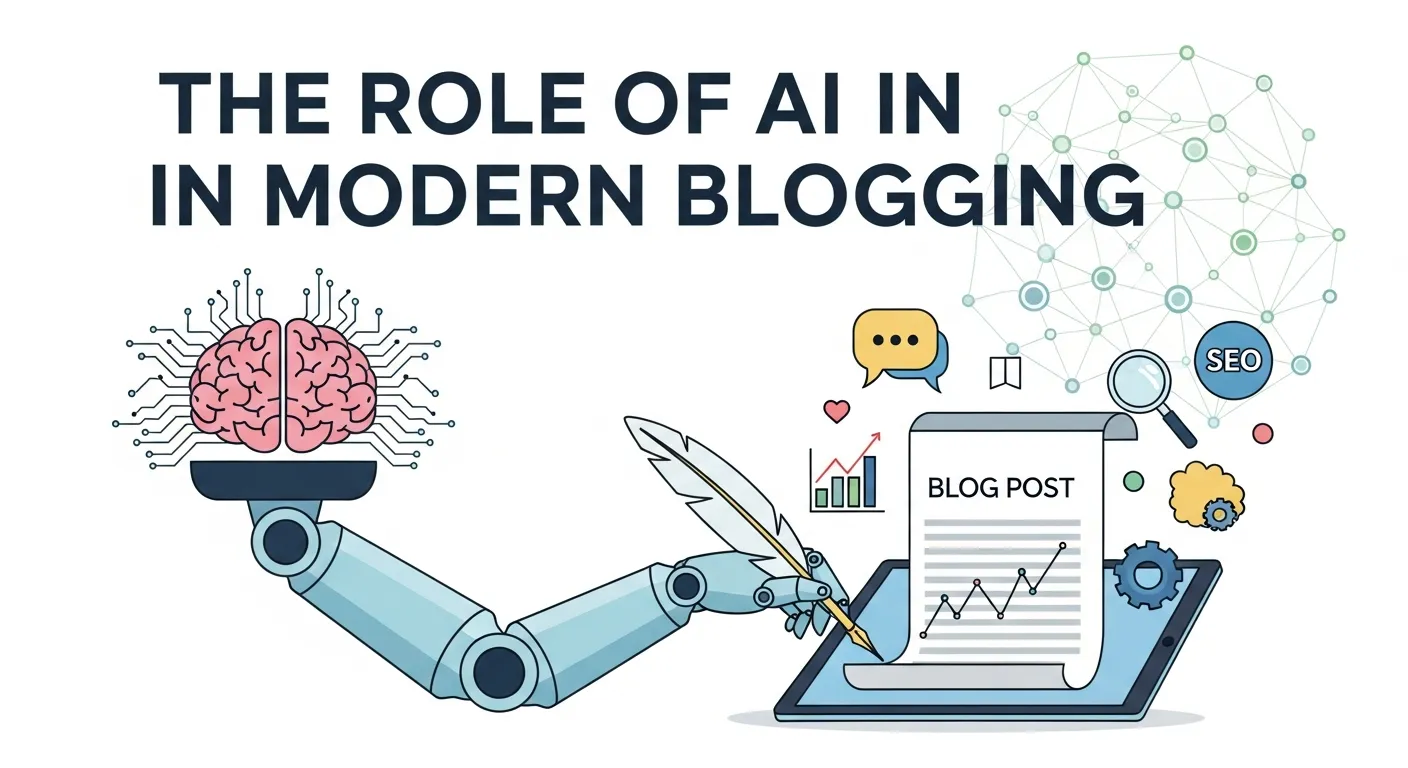
How AI transforms SEO is a hot topic. Tools can now help with automated branding, brand purpose development, and even brand crisis management. However, human oversight is essential to maintain a unique brand voice. While AI writing tools for bloggers can speed up the process, your brand storytelling is what keeps readers coming back.
Comparison of Inbound vs. Outbound Strategies
| Feature | Inbound Marketing (Blogging) | Outbound Marketing |
| Focus | Attracting interested readers | Reaching out to prospects |
| Cost | High sweat equity, low direct cost | Higher direct ad spend |
| Sustainability | Builds passive income through blogging | Stops when the budget runs out |
| Key Tools | Keyword research for blogging, SEO | Bulk SMS services, Media buying |
-
The “Viral” Funnel: Build a viral marketing funnel by identifying “rising” keywords with low difficulty and high social engagement potential.
Conversational SEO: Optimizing for Voice Search
As of 2026, over 50% of all searches are conducted via voice assistants like Gemini, Alexa, and Siri. Traditional keyword research for blogging often focuses on fragmented “computer-speak” (e.g., “best pizza NYC”), but voice search is conversational (e.g., “Hey Gemini, where is the best place to get a gluten-free pizza in Manhattan right now?”).
-
Long-Tail Question Phrases: Focus on the “5 Ws and 1 H” (Who, What, Where, When, Why, How). These form the backbone of voice queries.
-
Natural Language Patterns: Use pronouns (I, we, you) and avoid overly technical jargon. Your content should sound like a human talking to a friend.
-
The FAQ Power Move: Create dedicated FAQ sections. A single, well-structured question-and-answer pair can help you win the “Position Zero” featured snippet, which is exactly what voice assistants read aloud to users.
-
Local Intent: Many voice searches have a “near me” focus. If you offer local SEO services or run a physical business, ensure your Google Business Profile is fully optimized with the right brand positioning.
Multimodal SEO: Ranking via “The Machine Gaze”
Search is no longer just about reading; it’s about “seeing” and “hearing.” Multimodal search allows users to search using a combination of images, video, and voice. To stay relevant, your blog must be machine-readable across all formats.
-
Image SEO 2.0: Use Nano Banana or high-quality original photography. AI models now use Optical Character Recognition (OCR) to read text directly inside your images. Ensure your infographics are legible and your alt-text describes the “context,” not just the objects.
-
Video Key Moments: Google now indexes “Key Moments” within videos. By using Video SEO techniques like timestamps and descriptive chapters, you allow search engines to serve a 30-second clip of your video as the direct answer to a query.
-
Visual Entity Alignment: Ensure your visuals match your brand voice. If you are in luxury brand marketing, your images should trigger “high-end” sentiment scores in AI vision APIs. This builds a consistent brand perception in marketing.
Community-Led Research: Tapping into “Hidden” Keywords

Traditional tools sometimes miss the “slang” and emerging pain points found in private or semi-private communities. In 2026, some of the best keyword research for blogging happens on Reddit, Discord, and Quora.
-
Social Listening: Use social listening tools to monitor subreddits related to your niche. Look for recurring “How do I…” or “Why does…” questions that haven’t been answered by a major blog yet.
-
Sentiment Analysis: Use tools like Brandwatch to perform sentiment research. Understanding if a topic is polarizing (like the dark side of viral marketing) can help you craft a more engaging, opinionated brand story.
-
Forum-to-Blog Pipeline: Find a high-engagement thread on Reddit and turn it into a definitive “Flagship Guide.” Use the exact language the users use—these are your “hidden” keywords that tools with delayed data might miss.
-
Building Brand Authority: By answering these community questions on your blog and then sharing them back (properly adhering to community rules), you boost your brand awareness and drive high-intent traffic.
Future Opportunities: The Evolution of Blogging (2026-2030)

The next five years will redefine how we view passive income through blogging. As search becomes more conversational and multimodal, new doors are opening for creators.
-
Personalization at Scale: Future blogs will use AI to change content in real-time based on the reader’s history (e.g., a beginner sees a simpler version of a post than an expert).
-
Audio and Visual SEO: Keyword research for blogging will expand into Video SEO and Sonic Branding. People will “search” via images and voice commands more than typing.
-
The “Human” Premium: As AI content becomes a commodity, “Human-led” content (E-E-A-T: Experience, Expertise, Authoritativeness, Trust) will become a luxury good. Personal stories, unique case studies, and contrarian opinions will be the most valuable “keywords” you can target.
-
New Revenue Streams: Beyond ads, bloggers will monetize through creative webinar ideas, co-branding partnerships, and exclusive membership communities powered by their search authority.
Conclusion
Success in the digital age requires a blend of data and creativity. By mastering keyword research for blogging, you aren’t just chasing algorithms—you are building a bridge to your future audience. Stay consistent, monitor your brand equity KPIs, and always prioritize value. Ready to scale? Start by auditing your top three competitors today.
10 Frequently Asked Questions (FAQs)
1. How often should I perform keyword research for blogging?
Keyword research should be an ongoing process. While you should do a deep dive when starting your blog or a new category, you should perform mini-audits monthly to catch new trends and business trends.
2. Can I rank for keywords without using expensive tools?
Yes. You can use Google Search Console, “People Also Ask” boxes, and Wikipedia to find related topics. However, paid tools provide the competitive data needed for faster growth.
3. What is the difference between a niche and a category?
A niche is your overall market (e.g., Sustainable Fashion). A category is a sub-topic within that niche (e.g., Organic Cotton Basics). Proper brand architecture helps organize these.
4. How do I balance SEO with brand voice?
Keywords provide the skeleton, but your brand voice is the soul. Integrate keywords naturally into your headlines and subheaders, but keep your prose conversational and true to your brand personality.
5. Is blogging still a viable way to earn passive income?
Absolutely. By focusing on passive income through blogging via affiliate marketing, ads, and digital products, you can build a sustainable business. It requires a solid brand strategy roadmap.
6. What is “Search Intent” and why does it matter?
Search intent is the “why” behind a query. If you target a “buying” keyword with an “informational” article, you won’t rank well because you aren’t satisfying the user’s need.
7. How does page speed affect my blog’s SEO?
How to improve blogs page speed is a technical SEO fundamental. Google uses Core Web Vitals as a ranking factor; a slow site leads to a poor user experience and branding issues.
8. Should I focus on high-volume keywords?
Not necessarily. High-volume keywords are often too broad. New bloggers should focus on long-tail keywords with lower competition to build initial momentum and brand authority.
9. How do I handle a “brand crisis” on my blog?
Brand crisis management involves addressing negative feedback transparently. Utilize reputation management and review management services to maintain a positive brand perception.
10. What are LSI keywords?
LSI (Latent Semantic Indexing) keywords are terms related to your main topic. For a post about “Coffee,” LSI keywords might include “beans,” “brewing,” “caffeine,” and “espresso.” They help search engines understand context.