Ultimate Guide to Mastering WordPress SEO
Mastering WordPress SEO is the definitive path to transforming your website from a hidden digital island into a high-traffic authority.
This guide provides an actionable roadmap for Mastering WordPress SEO in 2026. You will learn to optimize technical foundations, leverage AI writing tools for bloggers, improve blog page speed, and implement advanced brand marketing strategies to build authority and drive sustainable organic growth.
The Core Pillars of Mastering WordPress SEO
In the modern digital landscape, search engines have evolved beyond simple keyword matching. Today, WordPress SEO requires a holistic approach that combines technical excellence, user experience (UX), and high-authority brand marketing.
1. The Technical Foundation
Before you can rank, your site must be discoverable. Start by ensuring your “Search Engine Visibility” settings in WordPress are unchecked.
- Install a Robust SEO Plugin: While the platform is SEO-friendly, plugins like Rank Math or Yoast SEO are essential for managing XML sitemaps, schema markup, and .
- SEO-Friendly Permalinks: Navigate to
Settings > Permalinksand select Post Name. This creates clean, keyword-rich URLs (e.g.,yoursite.com/mastering-wordpress-seo) rather than cluttered strings of numbers. - The Power of Hosting: Mastering WordPress SEO starts with your server. High-performance hosting (like NVMe SSD-based servers) reduces Time to First Byte (TTFB), a critical factor for improving blog page speed.
2. Strategic Keyword Research & Content Optimization
Content remains the “king,” but smart blogging strategies dictate that you write for both humans and AI-driven search engines.
- Identify Your Niche: Understanding what is a niche—and specifically a profitable one—allows you to target long-tail keywords with lower competition.
- Latent Semantic Indexing (LSI): Don’t just repeat your focus keyword. Use semantically related terms like “search engine visibility,” “crawling,” and “site architecture” to provide context.
- AI Writing Tools for Bloggers: Modern tools like Google Gemini or Jasper can help you brainstorm headlines and structure your posts. However, always add a human touch to maintain brand voice and brand personality in marketing.
3. Improving Blog Page Speed & Core Web Vitals
In 2026, Google’s Core Web Vitals (LCP, INP, and CLS) are non-negotiable ranking factors. A slow site leads to high bounce rates and lost revenue.
| Optimization Technique | Benefit for WordPress SEO |
| Image Compression | Reduces file size using WebP or AVIF formats. |
| Caching Plugins | Stores static versions of pages to reduce server load. |
| Minification | Removes unnecessary characters from CSS and JavaScript. |
| CDN Integration | Distributes content globally to reduce latency. |
To improve blog page speed, use tools like Google PageSpeed Insights to identify render-blocking resources. Implementing passive income through blogging often depends on these micro-optimizations that keep users engaged.
Advanced Strategies: Brand Authority & Outbound Marketing
Mastering WordPress SEO isn’t just about what’s on your site; it’s about how the world perceives your brand.
Building Brand Equity
Your brand positioning determines your authority. By consistently producing “information gain” (content that adds new value), you improve brand perception in marketing.
- Brand Awareness: Use social media and influencer marketing services to get your name in front of your target audience.
- Brand Consistency: Maintain a steady brand voice across all blog posts and guest appearances.
- Guest Posting Services: Ethical link building through guest posts on high-authority sites is still one of the best ways to signal trust to search engines.
Outbound vs. Inbound Marketing
While SEO is primarily an inbound marketing strategy, savvy bloggers use outbound marketing (like outbound email marketing and SMS marketing) to promote new content. This creates an initial traffic spike that signals relevance to search engines, helping you promote your blog faster.
Technical SEO Audit Guide
Regularly performing a Seo audit guide checkup is vital.
- Check for Broken Links: Use plugins to find 404 errors and implement 301 redirects.
- Schema Markup: Use Local SEO services or plugins to add structured data, which helps you win “Featured Snippets” and “Answer Engine Optimization” (AEO) spots.
- Mobile Optimization: With mobile-first indexing, your site must be flawless on smartphones. Avoid intrusive pop-ups that damage the user experience and branding.
Answer Engine Optimization (AEO): The New Search Frontier
In 2026, Mastering WordPress SEO means optimizing for AI assistants like Gemini and Perplexity. AEO focuses on providing direct, factual responses that AI can parse and read aloud.
- Structured Data: Use specialized Schema like
FAQPageandSpeakablemarkup to help AI identify “Position Zero” content. - Concise Summaries: Place a “TL;DR” (Too Long; Didn’t Read) section at the top of long-form guides. AI models prioritize these summaries for Search Generative Experience (SGE) snapshots.
Leveraging AI Writing Tools for Bloggers with E-E-A-T
While AI writing tools for bloggers can 10x your output, Google now penalizes “hollow” automation. To maintain rankings:
- Add “Human Proof”: Inject personal case studies, original photography, and unique “lived experience” (the first ‘E’ in E-E-A-T).
- Semantic Depth: Use AI to identify “content gaps”—topics your competitors missed—to ensure your post is the most comprehensive resource.
Advanced Brand Marketing: Building a Digital Knowledge Graph
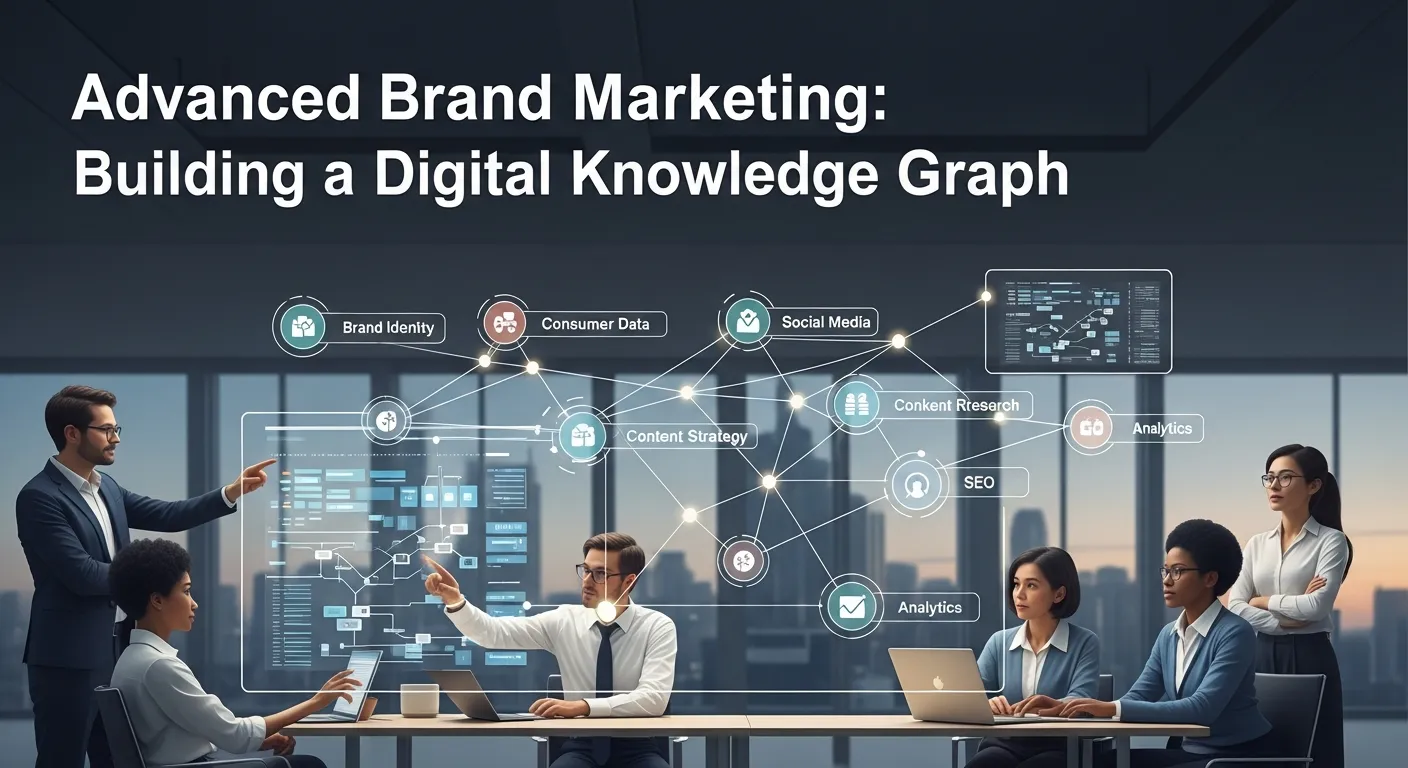
Search engines no longer just crawl pages; they map “entities.” Mastering WordPress SEO involves defining your brand personality in marketing so clearly that search engines recognize you as an authority.
- Brand Positioning Strategy: Ensure your site architecture reflects your core services.
- Brand Monitoring Services: Track unlinked brand mentions. These “social signals” contribute to your brand perception in marketing and influence organic trust.
Maximizing Visual SEO & Video Integration
By 2026, video accounts for over 80% of internet traffic. Video SEO is no longer optional.
- VideoObject Schema: Always use schema to tell Google exactly what your video is about.
- Embedded Transcripts: To optimize blog posts for accessibility and SEO, provide full transcripts for every embedded video. This allows crawlers to index the spoken content.
Conversational Search & Voice Optimization
“Voice as an input” is the standard. Users ask complex questions like, “What is the best way to choose a profitable blog for long-term passive income?”
- Natural Language Processing (NLP): Use long-tail, question-based headings (H2s) that mirror how people actually speak.
- Local SEO Services: Voice search is hyper-local. Ensure your local SEO is tight by mentioning specific neighborhoods and landmarks to capture “near me” traffic.
Zero-Click Discovery: Dominating the SERP Real Estate
“Zero-click” searches (where the user gets their answer on Google without clicking) are increasing.
- Visibility as a KPI: If you can’t get the click, get the “Impression.” Being the source for a Featured Snippet builds massive brand awareness even without a visit.
- Knowledge Panels: Use personal reputation management and Wikipedia page management strategies to help trigger a Knowledge Panel for your name or brand.
Improving Blog Page Speed for “Headless” and Core Web Vitals
Speed is now a binary ranking factor—you’re either fast enough or you’re invisible.
- Next-Gen Formats: Use AVIF images instead of JPEGs to significantly improve blog page speed.
- Headless WordPress Architecture: For enterprise sites, separating the backend (WordPress) from a high-speed frontend (like React or Next.js) can offer near-instant load times.
Strategic Internal Linking with AI Automation
A massive part of Mastering WordPress SEO is keeping users on your site longer.
- Link Whisper & AI: Use AI-powered internal linking tools to find relevant anchor text opportunities automatically.
- The Pillar-Cluster Model: Group your content into “clusters” to build topical authority in your specific niche.
Global Reach: Multilingual SEO & Brand Adaptation
If your brand marketing is limited to one language, you’re missing 70% of the web.
- Hreflang Tags: Use plugins like WPML to properly implement hreflang tags, ensuring the right version of your site shows up in the right country.
- Brand Adaptation Strategies: Don’t just translate; “localize” your content to fit the cultural context of different regions.
Topical Authority: Beyond the Single Keyword
In 2026, Google has moved away from ranking individual pages for specific keywords. Instead, it evaluates topical authority—the measure of whether your site is a trusted, comprehensive expert on an entire subject.
- The Pillar-Cluster Model: Don’t just write a post on “SEO tips.” Create a “Pillar Page” (The Ultimate Guide) and link it to 20 “Cluster” posts covering every sub-niche (e.g., “SEO for Lawyers,” “SEO for E-commerce”).
- Semantic Web Mapping: Use tools like Ahrefs or SEMrush to find “content gaps.” If you haven’t covered a specific sub-topic that your competitors have, your topical authority score drops.
- Information Gain: Search engines now prioritize “Information Gain”—content that adds new facts or perspectives not already found in the top 10 results.
Generative Engine Optimization (GEO): The AI Strategy
Traditional SEO is about ranking in a list of links. GEO is about being the “Source of Truth” that an AI (like ChatGPT, Gemini, or Perplexity) uses to generate its answer.
- The “Answer-First” Structure: Place your most direct, concise answer in the first 100 words of your post. This makes it easy for AI “crawlers” to extract and cite your site as the primary source.
- Modular Content Design: Write in “passages” or “chunks.” Use H3 subheadings as specific questions (e.g., “How do I improve blog page speed in 2026?”) and follow them immediately with the solution.
- Citation Readiness: Ensure your brand name and personal brand strategy are consistently mentioned across the web. AI models are more likely to cite a brand they “recognize” from multiple high-authority databases like Wikipedia or LinkedIn.
Sustainability and “Green” SEO Performance
Digital sustainability is now a subtle but real ranking signal. Efficient, lightweight sites aren’t just faster—they have a smaller carbon footprint, which aligns with modern brand perception in marketing.
- Eco-Friendly Hosting: Migrate to hosting providers that utilize 100% renewable energy. This can be highlighted in your brand storytelling to build trust with eco-conscious consumers.
- Reducing Data Waste: Minimize unnecessary “weight” by using Next-Gen formats (like AVIF for images) and cleaning up your database. A “lean” site is a fast site, and a fast site is an SEO-winning site.
- Long-Term Performance Durability: Instead of high-frequency, low-quality posting, focus on “Evergreen” content. This reduces the energy required for constant re-crawling and ensures your passive income through blogging remains stable for years.
Comparison: Traditional SEO vs. 2026 Discovery SEO
| Strategy Component | Traditional SEO (Legacy) | Discovery/GEO SEO (Modern) |
| Success Metric | Click-Through Rate (CTR) | Brand Citation & Inclusion Rate |
| Content Focus | Keyword Density | Topical Depth & Information Gain |
| Format | Text-only Blog Posts | Multi-modal (Text, Video, Audio) |
| Authority Signal | Backlink Count | E-E-A-T & Entity Recognition |
Future Opportunities: The Shift from “Search” to “Discovery”
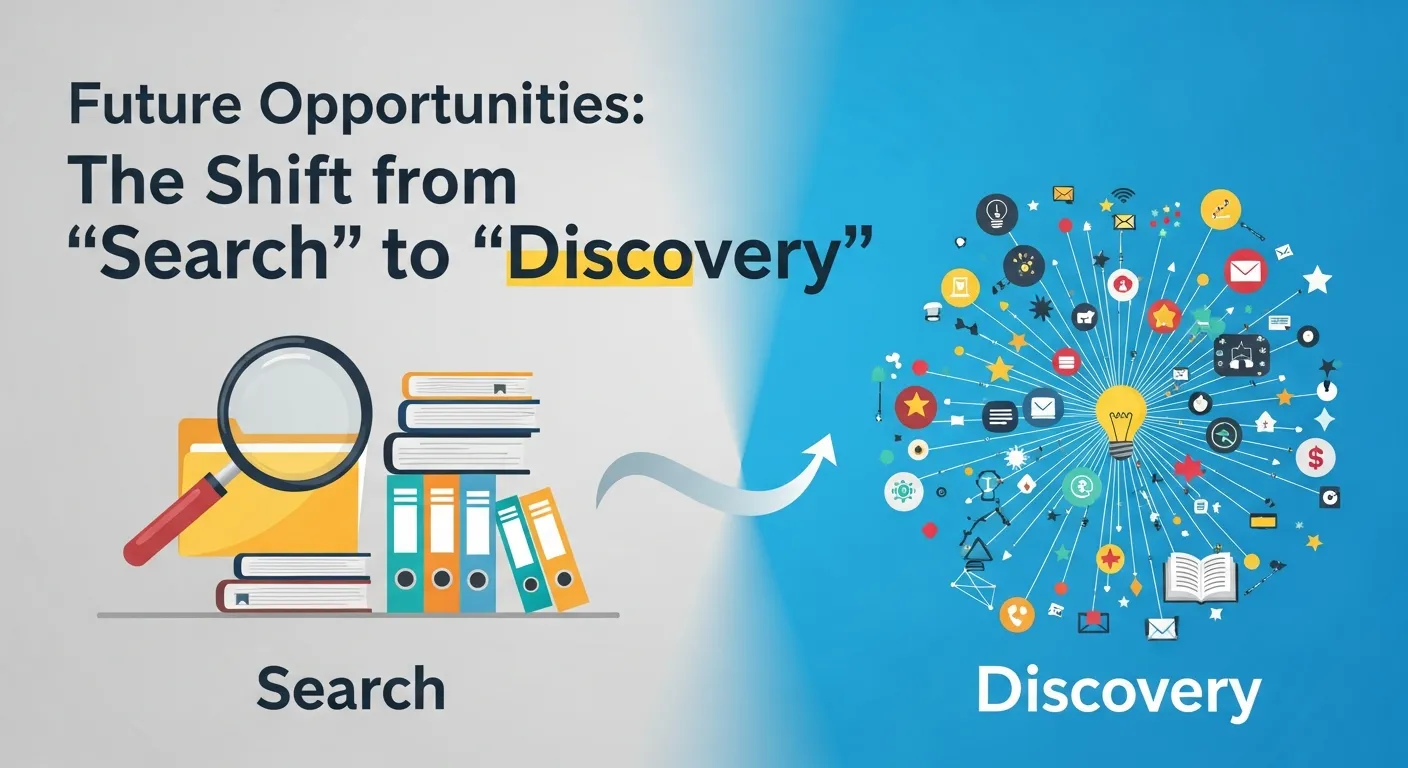
Looking toward 2027 and beyond, WordPress sites will shift toward Dynamic Content Delivery.
- Personalization: Using AI to show different content to different users based on their search history (similar to how Netflix works).
- Predictive SEO: Using tools like SEMrush AI to predict which topics will trend before they hit the mainstream, giving you a “first-mover” advantage.
Comparison: Traditional vs. Future WordPress SEO
| Feature | Traditional SEO (2020-2024) | Future WordPress SEO (2026+) |
| Primary Goal | Blue link rankings (Clicks) | AI Citations & AEO (Visibility) |
| Keyword Strategy | High volume / Exact match | Semantic intent / Entity-based |
| Content Type | Text-heavy blog posts | Multi-modal (Video + Audio + Text) |
| User Experience | Desktop responsive | Mobile-first / Screenless (Voice) |
To master the final frontier of Mastering WordPress SEO, you must look beyond the screen. As we move further into 2026, the transition from “Search Engines” to “Discovery Engines” is complete.
Here are the final three critical sections to ensure your site remains dominant in an AI-first world.
Conclusion
Mastering WordPress SEO is an ongoing journey of refinement. By balancing technical “under-the-hood” optimizations with high-quality content and a strong brand strategy roadmap, you create a sustainable engine for organic growth. Start with the basics of site speed and keyword intent, then scale your efforts through ethical link building and integrated marketing.
Frequently Asked Questions (FAQs)
1. How do I choose a profitable blog niche?
Identify a cross-section between your expertise, high search volume, and “commercial intent.” A profitable niche usually solves a specific problem for a target audience.
2. What are the best AI writing tools for bloggers in 2026?
Popular choices include ChatGPT (OpenAI), Claude (Anthropic), and Google Gemini. These tools are best used for outlining, research, and overcoming writer’s block.
3. How can I improve my blog’s page speed quickly?
Switch to managed WordPress hosting, use a lightweight theme like Astra or GeneratePress, and install an image optimization plugin like ShortPixel to serve WebP images.
4. Is outbound marketing still effective for SEO?
Yes. While it doesn’t “directy” affect rankings, outbound marketing (like newsletters) drives traffic, which increases brand awareness and the likelihood of earning natural backlinks.
5. What is the difference between brand positioning and brand perception?
Brand positioning is how you want your brand to be perceived in the market. Brand perception is the actual reality of how consumers view your brand.
6. How do I optimize blog posts for Featured Snippets?
Use clear H2/H3 headings as questions and provide concise, 40-50 word answers immediately following the heading. Use lists and tables where appropriate.
7. Why is local SEO important for small businesses?
Local SEO services help you appear in “near me” searches and Google Maps, which is essential for driving foot traffic to physical locations.
8. What is “Answer Engine Optimization” (AEO)?
AEO is the practice of optimizing content for AI-driven “answer engines” (like Perplexity or ChatGPT) that provide direct answers instead of a list of links.
9. How do I handle a brand crisis management situation?
Be transparent, respond quickly, and use digital reputation management tools to monitor mentions and address negative content directly.
10. Can I generate passive income through blogging without SEO?
It is extremely difficult. SEO provides the consistent, “free” traffic needed to generate revenue from ads, affiliate marketing, or digital products over the long term.