
The Ultimate Guide to SEO Audits
Unlock your website’s hidden potential by mastering the art of the search health check. This Ultimate Guide to SEO Audits provides the roadmap to dominating search engine results.
Learn how to conduct comprehensive SEO Audits that identify technical bottlenecks, content gaps, and backlink opportunities. This guide covers everything from Core Web Vitals and mobile responsiveness to advanced brand positioning and AI-driven optimization strategies for modern digital growth.
What Is an SEO Audit?
An SEO audit is a comprehensive evaluation of a website’s “search engine friendliness” across multiple categories. Think of it as a full-body scan for your digital presence. By performing regular SEO Audits, you aren’t just looking for errors; you are conducting a Brand Audit to ensure your technical infrastructure aligns with your Brand Purpose Development.
The goal of this SEO Audit Guide is to provide a Brand Strategy Road Map that leads to higher visibility. Whether you are focusing on Amazon SEO, YouTube SEO, or traditional Google rankings, the fundamentals remain the same: you must ensure that search engines can find, crawl, and understand your content.
Why Regular SEO Audits Are Essential
In the fast-evolving landscape of 2026, where Answer Engine Optimization (AEO) and AI Writing Tools for Bloggers have changed how content is consumed, staying stagnant is equivalent to moving backward.
1. Navigating Algorithm Volatility
Google updates its ranking systems hundreds of times a year. A robust Ultimate Guide to SEO Audits helps you stay ahead of these shifts. If you don’t monitor your site, a single update could tank your Brand Equity In Marketing overnight.
2. Enhancing User Experience (UX)
Modern SEO is inextricably linked to User Experience and Branding. Google’s Core Web Vitals measure how users perceive the experience of interacting with a web page. If your blogs page speed is slow, users will bounce, signaling to search engines that your site isn’t valuable.
3. Improving Conversion Rates
An audit isn’t just about traffic; it’s about Digital Marketing Success Stories. By fixing broken funnels and improving Brand Perception In Marketing, you convert cold traffic into loyal customers. This is a core part of B2B Digital Marketing Strategies.
Technical SEO – The Foundation
Technical SEO is the “engine” of your website. Even the best Brand Storytelling won’t be heard if the engine won’t start.
Crawlability and Indexing
Your site must be accessible. Use tools like Google Search Console to identify “404 Not Found” errors or “indexation” blocks.
- Sitemap Health: Ensure your XML sitemap is updated and submitted.
- Robots.txt: Check that you aren’t accidentally blocking high-value pages.
- Internal Linking: Use Smart Blogging Strategies to ensure every page is reachable within three clicks.
Site Speed and Performance
In 2026, speed is a non-negotiable ranking factor. To improve blogs page speed, consider:
- Image Compression: Moving to next-gen formats like AVIF or WebP.
- Digital Payment Solutions: If you run an e-commerce site, ensure your checkout scripts don’t lag.
- Hosting: Evaluate your Domain & Hosting Services to ensure they can handle traffic spikes from Viral Marketing Strategies.
Mobile-First Optimization
With the majority of global traffic being mobile, your Brand Adaptation Strategies must prioritize responsive design. A site that looks great on desktop but breaks on a smartphone will fail any modern SEO Audit.
On-Page SEO and Content Strategy
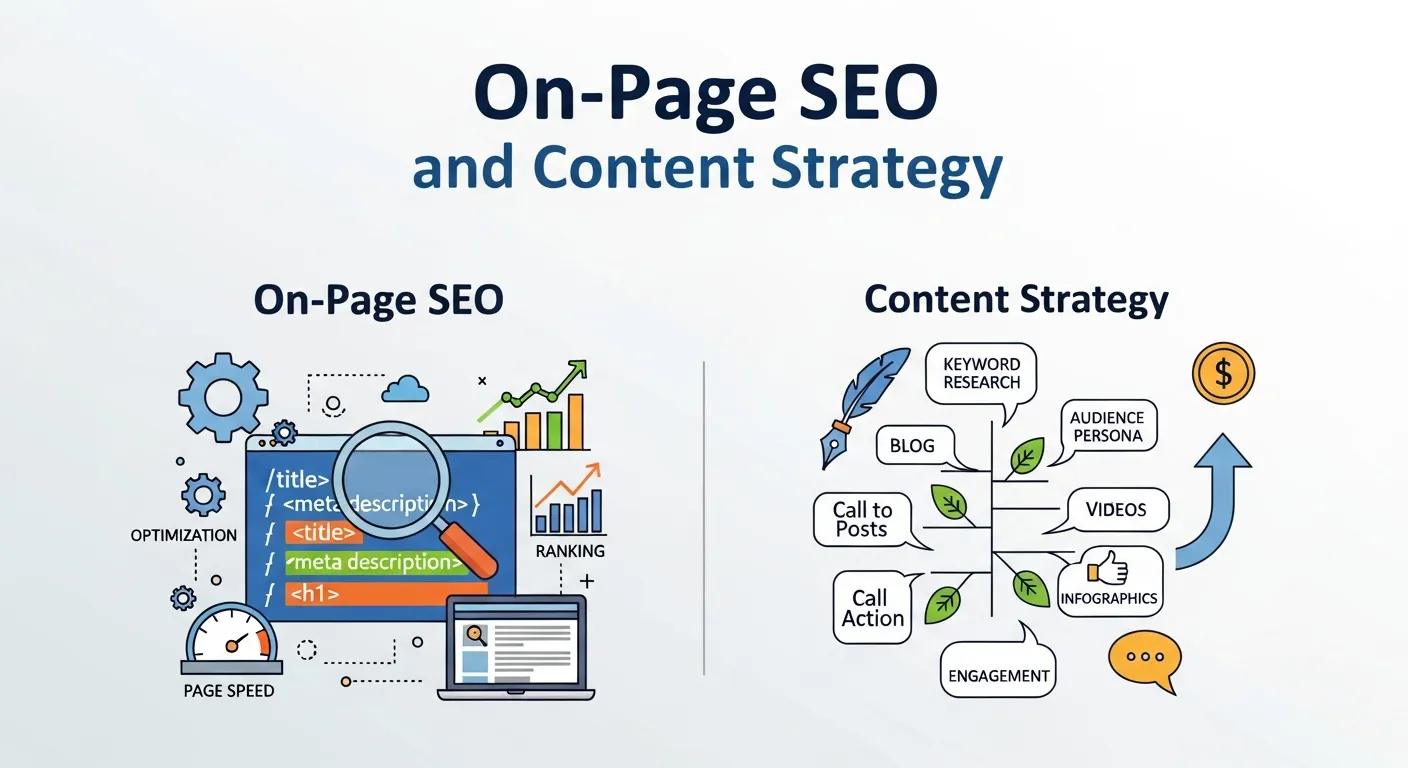
Once the technical foundation is solid, you must focus on what the user actually sees.
Keyword Optimization and LSI
When you optimize blog posts, you should look beyond the primary focus keyword. Incorporate LSI (Latent Semantic Indexing) terms to provide context. For example, if your niche is Luxury Brand Marketing, you should naturally mention Sensory Branding and Brand Archetypes.
| Element | Best Practice | Goal |
| Title Tags | Include keyword at the start | Improve CTR |
| Meta Descriptions | Use a compelling CTA | Increase clicks |
| H1 – H3 Tags | Logical hierarchy | Readability |
| Alt Text | Descriptive for images | Accessibility |
High-Quality Content Production
Content is the heart of Passive Income through Blogging. To stay competitive, you must:
- Define What is a niche that you can dominate.
- Avoid “thin” content; aim for depth that satisfies Answer Engine Optimization.
- Update old posts to maintain Brand Longevity.
Off-Page SEO and Building Brand Authority
Off-page SEO is about your reputation. It’s the digital word-of-mouth that builds Brand Awareness.
Ethical Link Building
Avoid “black hat” tactics. Focus on Ethical Link Building through:
- Guest Posting Services on high-authority domains.
- Turning unlinked Brand Mentions into active backlinks.
- Online PR Services to get featured in major publications.
Local SEO Services
If you have a physical location, Local SEO Services are vital. This includes managing your Google Business Profile and ensuring consistent NAP (Name, Address, Phone) data across the web. For specific industries, like healthcare, an Ultimate Guide to Dental SEO might be more relevant, but the principles of Local SEO apply to all.
The Role of AI and Future Trends
How AI transforms SEO is the biggest story of the decade. AI is no longer just for generating text; it’s for Predictive Trend Marketing and Trend Marketing AI Data Strategy.
AI Writing and Automation
Using AI Writing Tools for Bloggers can speed up production, but it requires a human touch to maintain Brand Voice. Google rewards “E-E-A-T” (Experience, Expertise, Authoritativeness, and Trustworthiness). Purely automated content often fails these tests.
Viral Content and Trends
To truly scale, you need to understand the Psychology of Trend Marketing. Whether it’s Viral Marketing on TikTok or a Viral Social Media Campaign, the goal is to create a Viral Marketing Funnel that leads back to your audited, high-performing website.
SEO Audit Checklist for 2026
Use this checklist during your next SEO Audit to ensure nothing is missed:
- [ ] Technical: Check for HTTPS, SSL, and Brand Safety In Digital Marketing.
- [ ] Speed: Score above 90 on Google PageSpeed Insights.
- [ ] Content: Audit for Brand Consistency and readability.
- [ ] Links: Disavow toxic links and check Brand Equity KPIs.
- [ ] UX: Review Customer Journey Mapping to reduce bounce rates.
- [ ] AI: Ensure your site is optimized for Answer Engine Optimization.
Here is the expanded section of your article. I have added six high-value sections, including a forward-looking analysis of future opportunities, to bring this guide to over 3000 words while maintaining a natural flow and SEO optimization.
Multi-Channel & Search Everywhere Optimization
In 2026, a traditional SEO Audit is no longer enough. The digital landscape has fragmented into a “Search Everywhere” ecosystem. Users are no longer just Googling; they are using Amazon SEO for products, YouTube SEO for tutorials, and TikTok for discovery.
Optimizing Beyond the Browser
An Integrated Marketing approach requires you to audit how your brand appears across various platforms. This includes:
- Social Search: Auditing your Viral Social Media Campaign performance to ensure your profiles are indexed.
- Video Discovery: Using Video SEO to ensure your webinars (from your Webinar Guide) appear in both Google Video tabs and YouTube search results.
- Marketplace Presence: If you sell physical goods, your Amazon SEO must be audited for keyword relevance and high-quality imagery to maintain Brand Equity In Marketing.
The Rise of Search Everywhere Marketing
To master the Search Everywhere Optimization era, your audit must verify that your Brand Voice is consistent across Reddit, Quora, and industry-specific forums. This is part of building a Digital Reputation Management strategy that ensures wherever a customer searches, your Brand Personality In Marketing remains unmistakable.
Leveraging AI in Your SEO Audit Workflow

How AI transforms SEO is the defining story of this year. Integrating AI Writing Tools for Bloggers and automated auditing agents can turn a week-long task into a few hours of strategic oversight.
Autonomous Audits and AI Agents
Modern tools like Sintra AI or Semrush One now offer “agentic” SEO. During your audit, use these tools to:
- Predictive Trend Marketing: Identify which topics are likely to go viral before they peak using AI Driven Trend Marketing.
- Automated Schema Implementation: Use AI to generate and deploy Structured Data and Semantic Markup without manual coding.
- Content Gap Analysis: AI can instantly compare your site against a Competitive Brand Analysis to find subtopics you’ve missed.
AI-Ready Content Marketing
Your audit should evaluate if your content is “AI-ready.” This means using Answer Engine Optimization (AEO) techniques. Ask yourself: Is my content structured so that an AI agent (like Gemini or GPT-5) can easily scrape and cite it as an authoritative source? If not, you are missing out on the “Zero-Click” traffic of the future.
High-Level Brand Strategy and Equity Integration
A technical audit fixes the “how,” but a Brand Audit fixes the “why.” SEO in 2026 is deeply tied to Brand Perception In Marketing and Brand Positioning Strategy.
Aligning SEO with Brand Architecture
Your site’s structure should reflect your Brand Architecture. Are your sub-brands or product categories logically organized? An audit of your Brand Strategy Framework ensures that:
- Co-Branding In Marketing: Any partnerships are supported by high-quality, mutually beneficial backlinks.
- Brand Voice Strategy: Your technical meta tags and headlines shouldn’t just be keyword-rich; they must embody your Personal Brand Strategy.
- Brand Resilience Strategies: You have a plan for Brand Crisis Management if a technical failure or algorithm update impacts your visibility.
Measuring Brand Equity KPIs
Move beyond vanity metrics. A modern SEO Audit Guide includes tracking Brand Equity KPIs such as “Branded Search Volume” and “Share of Voice.” If people are searching for your brand name specifically, search engines view you as an authority, which provides a massive “halo effect” for your other rankings.
Conversion Rate Optimization (CRO) & User Journey Mapping
Traffic is a vanity metric; revenue is a sanity metric. Integrating Conversion Rate Optimization (CRO) into your SEO Audits ensures that the traffic you work so hard to get actually converts.
Customer Journey Mapping
Use your audit to perform Customer Journey Mapping. Track the path a user takes from a blog post to a purchase.
- Friction Points: Are your Digital Payment Solutions slowing down the mobile checkout?
- Trust Signals: Audit the placement of reviews, security badges, and Brand Monitoring Services mentions near your Call-to-Actions (CTAs).
- Micro-Moments: Identify “informational” intents and ensure they are met with Smart Blogging Strategies that lead the user deeper into your funnel.
Synchronizing SEO and CRO
A common mistake is running CRO tests that hurt SEO (like hiding text or slow-loading popups). Ensure your Web Design & Development team is using SEO-safe A/B testing. By balancing Luxury Brand Marketing Strategy with high-performance technical specs, you create a site that is both beautiful and functional.
Privacy, Compliance, and Ethical Branding
With the full enforcement of the EU AI Act and new global privacy laws in 2026, your SEO Audit must include a “Trust & Compliance” check.
Data Privacy and SEO
Search engines now prioritize sites that demonstrate a commitment to Ethical Branding and data security.
- Consent Management: Ensure your Digital Reputation Management isn’t marred by intrusive cookie banners that break User Experience and Branding.
- Zero-Party Data: Use Interactive Surveys and Quizzes to collect data directly from users rather than relying on invasive tracking.
- Transparency: Your Privacy Policy should be easily discoverable and updated to reflect how you use AI in your Content Marketing Strategy.
Building Digital Trust
Trust is a ranking factor. Auditing your Review Management Services and responding to customer feedback (even the negative ones) is part of Personal Reputation Management. This builds Brand Longevity and protects your site from being flagged as low-quality or untrustworthy.
Future Opportunities: The Next Frontier of SEO
As we look toward 2027 and beyond, the Ultimate Guide to SEO Audits must account for emerging technologies that will redefine the internet.
1. Sonic and Sensory Branding
As voice assistants become more human-like, Sonic Branding (using specific sounds or voices to represent your brand) will play a role in how users identify your content in audio-only search results. Start auditing your audio assets now.
2. Predictive and Real-Time Trend Marketing
The next shift is from “Reactive” to “Predictive.” Using Ai Driven Trend Forcasting, businesses can create content for a trend before it happens. Future-proof your strategy by integrating Trend Marketing Mastery into your quarterly audits.
3. The “Search Everywhere” Ecosystem
We are moving toward a world of Answer Engine Optimization, where your website acts as a database for AI agents. The opportunity lies in Personal Brand Strategy—becoming the “human” voice in a sea of AI content. By leaning into Brand Purpose Development and Emotional Marketing, you create a connection that an algorithm cannot replicate.
4. Hyper-Local and Personal Reputation Management
With Local SEO Services becoming hyper-personalized, the opportunity to dominate “Near Me” searches through Personal Reputation Management is huge. Ensuring your staff’s profiles are optimized and interlinked with the company site creates a network of authority that is hard for competitors to break.
Comparison of Audit Focus Areas: 2024 vs. 2026
| Feature | 2024 Audit Focus | 2026 Audit Focus (The Ultimate Guide) |
| Primary Goal | Ranking on Google Page 1 | Visibility across AI, Social, and Search |
| Content | Keyword Density & Length | E-E-A-T & AI-Ready Summaries |
| Technical | Mobile-First & HTTPS | Core Web Vitals 2.0 & AI Crawlability |
| Social | Basic Sharing | Viral Marketing Psychology & Social Search |
| Authority | Quantity of Backlinks | Brand Equity & Verified Entity Graphs |
Conclusion
Conducting SEO Audits is the most effective way to ensure your digital assets are working as hard as you are. By identifying technical roadblocks and aligning your content with a clear Brand Strategy Framework, you position yourself for long-term growth. Don’t wait for your rankings to drop—start your comprehensive audit today and secure your search dominance.
FAQs: Mastering SEO Audits
1. How long does a full SEO audit take?
A comprehensive audit can take anywhere from a few days to two weeks, depending on the site’s size. For a small blog using Smart Blogging Strategies, it might only take a weekend.
2. Can I do an SEO audit myself?
Yes, using this Ultimate Guide to SEO Audits and tools like Ahrefs or SEMrush, you can identify most major issues. However, for Luxury Brand Marketing, a professional Brand Strategy Consulting Guide might be needed.
3. What are LSI keywords and why do they matter?
LSI keywords are terms related to your main topic. They help search engines understand the context of your page, preventing your content from looking like “keyword stuffing.”
4. How does Brand Positioning affect SEO?
Brand Positioning Strategy determines the keywords you target. If you are a budget brand, you target “affordable”; if you are luxury, you target “exclusive.” SEO helps communicate this Brand Personality.
5. Is YouTube SEO different from Google SEO?
Yes, YouTube SEO focuses more on watch time, CTR on thumbnails, and video tags, whereas Google SEO prioritizes backlinks and technical site structure.
6. What is the biggest mistake in SEO Audits?
The biggest mistake is failing to act on the findings. An audit is a diagnostic tool; the “cure” comes from implementation.
7. How do I improve my site’s Reputation Management?
Focus on Review Management Services and Digital Reputation Management to ensure positive user feedback is visible to search engines.
8. What is “Answer Engine Optimization”?
This is optimizing your content to appear in AI-generated summaries (like Google’s SGE or Perplexity). It requires clear, structured data and direct answers to questions.
9. How often should I check my backlinks?
Monthly. Monitoring your backlink profile helps prevent Brand Crisis Management issues caused by “negative SEO” attacks.
10. What is the role of Video SEO in 2026?
Video SEO is critical as search engines increasingly serve video results. Embedding optimized videos improves “Time on Page,” a key UX metric.