How to Build a Blog Sales Funnel That Actually Converts
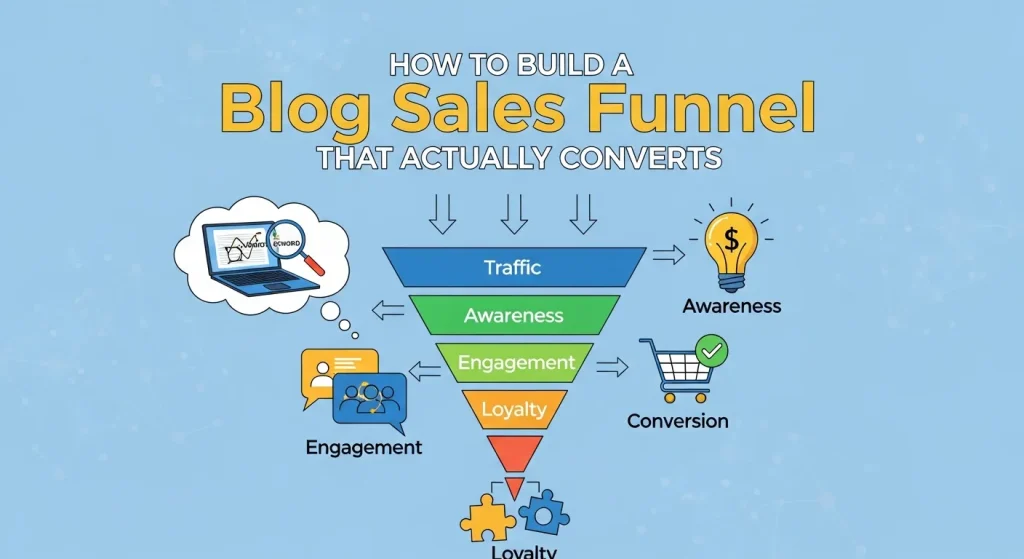
If you want to turn your blog into a predictable income source, you must learn how to build a blog sales funnel instead of relying on random traffic spikes.
A blog sales funnel is a strategic framework that guides readers from initial problem awareness to a final purchase decision. This guide explores how to build a blog sales funnel using product marketing principles, consumer psychology, and technical automation to create a scalable revenue engine.
What Is a Blog Sales Funnel?
A blog sales funnel is a strategic content framework designed to guide readers through different stages of awareness until they are ready to buy. Unlike paid funnels that rely on expensive ads, a blog funnel is powered by SEO-driven content that attracts organic traffic over time.
The goal is simple: Turn visitors → into leads → into customers.
Why Every Blogger Needs a Funnel
Most bloggers publish content consistently but fail to convert readers because there is no structured journey. When you learn how to build a blog sales funnel, every post plays a specific role—from attracting the right audience to nurturing trust and driving conversions.
The Core Blog Sales Funnel Stages
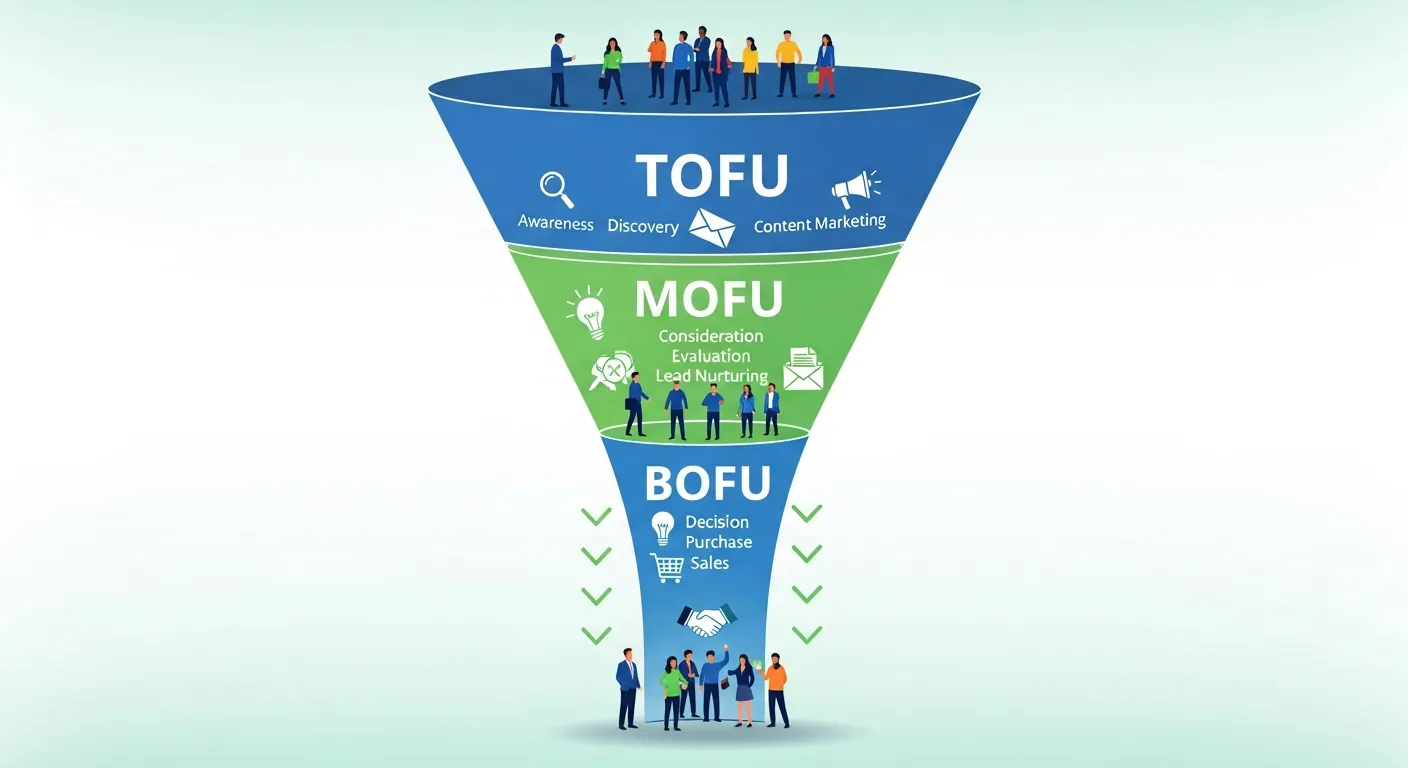
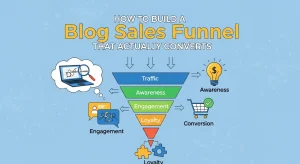
To successfully build a blog sales funnel, you must understand the three main stages of the customer journey.
1. Top of Funnel (TOFU): Awareness
This stage attracts new readers who are unaware or only slightly aware of their problem. The focus is education, not selling. Use Smart Blogging Strategies to create high-level content.
-
Examples: Beginner guides, industry trends, and problem-focused articles.
-
Primary Goal: Traffic and email signups.
2. Middle of Funnel (MOFU): Consideration
Readers now understand their problem and are researching solutions. This is where you establish Brand Awareness and trust.
-
Examples: Solution comparisons, buying guides, and case studies.
-
Primary Goal: Lead nurturing and engagement.
3. Bottom of Funnel (BOFU): Conversion
Readers are ready to buy but need final reassurance. Content here should highlight your Brand Positioning.
-
Examples: Product walkthroughs, testimonials, and pricing guides.
-
Primary Goal: Sales and conversions.
Common Blog Sales Funnel Mistakes to Avoid
Even if you know the basics of how to build a blog sales funnel, small errors can tank your conversion rates.
-
Creating only TOFU content: If you only write beginner guides, you’ll have traffic but no sales.
-
Weak Calls to Action: If readers don’t know the next step, they will leave.
-
Ignoring Page Speed: You must improve blogs page speed to prevent high bounce rates.
-
No Email List: Failing to capture leads means you lose the chance to nurture them.
| Common Mistake | Why It Hurts Conversions | Recommended Solution |
| No funnel strategy | Content lacks direction | Map posts to TOFU, MOFU, BOFU |
| Traffic-only focus | No monetization | Add CTAs and lead magnets |
| Generic content | Low engagement | Write for a specific niche |
| No email follow-up | Lost leads | Use Email Marketing Services |
Thinking Like a Product Marketer
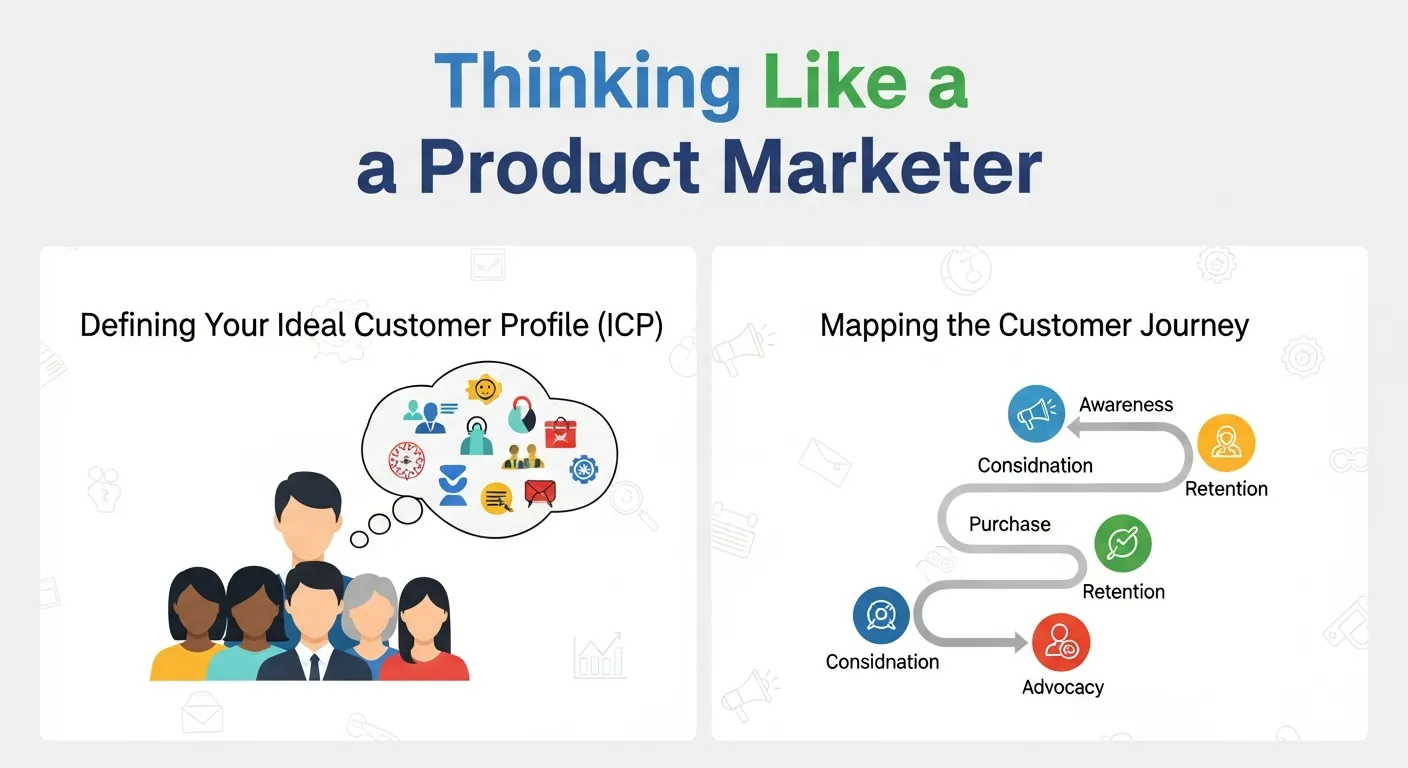
Product marketers design messaging around customer behavior. To build a blog sales funnel that works, you must adopt this mindset.
Defining Your Ideal Customer Profile (ICP)
Writing for everyone leads to conversions for no one. Your ICP should include:
-
Demographics: Age, profession, and income level.
-
Pain Points: The specific frustrations your audience faces.
-
Buying Objections: Why they might hesitate to buy from you.
Mapping the Customer Journey
Every customer follows a decision-making path. Your blog should answer the next logical question at every step:
-
Problem Recognition: “Why is my website slow?”
-
Information Research: “How to improve blogs page speed.”
-
Solution Comparison: “Best caching plugins for WordPress.”
-
Purchase Decision: “Buy WP Rocket.”
Creating Content for Buyer Awareness Stages
Unaware & Problem-Aware (TOFU)
These readers don’t know your brand. Focus on Brand Marketing to get on their radar. Use Ai Writing Tools for Bloggers to brainstorm “common mistakes” articles or educational how-to guides.
Solution-Aware (MOFU)
Readers know solutions exist. This is the time to leverage Personal Brand Strategy and Brand Voice. Offer tool comparisons and Creative Webinar Ideas to prove your expertise.
Product-Aware & Most-Aware (BOFU)
This is where you close the deal. Use Customer Success Stories and Brand Equity In Marketing to provide final validation.
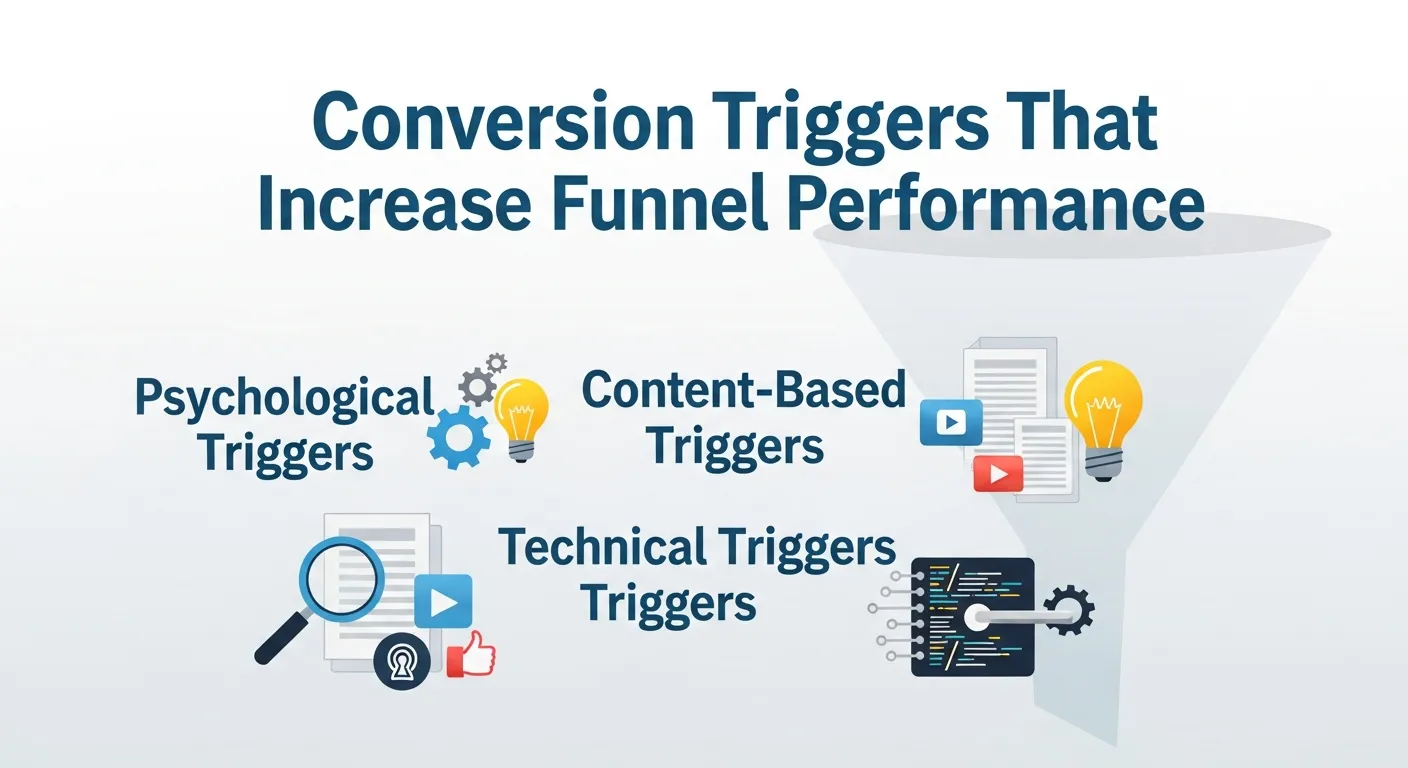
Content alone doesn’t convert; psychology does. To effectively build a blog sales funnel, use these triggers:
Psychological Triggers
-
Scarcity & Urgency: Use limited-time offers to trigger Marketing FOMO.
-
Social Proof: Display testimonials and Review Management Services.
-
Authority: Show your credentials and data-driven insights.
-
Reciprocity: Give away a free Guide to mastering wordpress or a checklist.
Content-Based Triggers
-
Curiosity Gaps: Headlines that make readers want to click.
-
Future Pacing: Showing the reader what life looks like after their problem is solved.
-
Pattern Interrupts: Using bold claims or unusual statistics to stop the scroll.
Technical Elements That Support Blog Funnels
To maximize results, your technical setup must be flawless.
-
Contextual CTAs: Links placed naturally within the content.
-
Exit-Intent Popups: Catching users before they leave.
-
Content Upgrades: Post-specific PDFs that add extra value.
-
Automation: Setting up Email Marketing Services for drip campaigns.
-
SEO Excellence: Following a Seo audit Guide to ensure your pages rank.
Measuring and Optimizing Your Funnel
A high-performing funnel requires ongoing Brand Audit and optimization. Track these metrics:
-
Organic Traffic Growth: Are your TOFU posts bringing in people?
-
Conversion Rates: How many visitors are becoming subscribers?
-
Funnel Drop-off Points: Where are people leaving your site?
-
Revenue per Post: Which articles are actually making money?
Remember, how ai transforms seo means you should also monitor your performance in Answer Engine Optimization.
Scaling Your Blog Sales Funnel
Once your funnel is working, it’s time to scale your results.
-
Content Clusters: Create groups of related posts around your top-performing content.
-
Repurposing: Turn articles into Youtube seo optimized videos or social media threads.
-
Inbound Marketing: Use Inbound Marketing to draw more eyes to your TOFU content.
-
Invest Your Income: Learn how to invest blogging income back into the business for faster growth.
The Psychology of High-Ticket Conversions
To understand how to build a blog sales funnel that moves expensive products, you must master Emotional Marketing. Most readers make decisions based on feelings and then justify them with logic.
Your content should use Brand Voice Strategy to tap into these emotions. For instance, in Luxury Brand Marketing Strategy, the funnel doesn’t just solve a problem; it provides status and exclusivity. By incorporating a Brand Archetypes Framework Case Studies approach, you can position your blog as the “Hero” or the “Sage” in the reader’s journey, making the eventual purchase feel like a natural evolution of their identity.
Implementing Retention and Advocacy (The Post-Purchase Funnel)
Many guides on how to build a blog sales funnel stop at the sale. However, true growth comes from Brand Resilience Strategies. Once a reader becomes a customer, your blog should offer “Post-Purchase” content:
-
Product Tutorials: Show them how to get the most out of their purchase.
-
Customer Success Stories: Highlight others achieving results to reduce buyer’s remorse.
-
Loyalty Content: Use SMS Marketing or Whatsapp Marketing Services to send exclusive tips that aren’t on the public blog.
This builds Brand Longevity Challenges resistance, ensuring your customers don’t just buy once but become lifelong fans of your Personal Brand Strategy.
Advanced Traffic Strategies: Outbound Meets Inbound
While a blog is traditionally an Inbound Marketing tool, the most successful funnels in 2026 use a hybrid approach. You can accelerate your results by using Outbound Marketing to point targeted traffic to your best TOFU posts.
Consider these “Booster” strategies:
-
Outbound Email Marketing: Reach out to industry peers to share your “State of the Industry” reports.
-
Guest Posting Services: Build Ethical Link Building profiles that drive high-authority traffic back to your funnel.
-
Viral Marketing on Tiktok: Create short, high-energy clips that solve one tiny problem and lead viewers to a deep-dive blog post using a Viral Content Marketing Strategy.
The Impact of AI and “Answer Engine” Evolution

The landscape of how to build a blog sales funnel has changed with the rise of Answer Engine Optimization. Users are no longer just clicking links; they are asking AI for direct answers.
To keep your funnel relevant:
-
Use Ai driven Trend Forcasting to identify “Micro Trends” before they peak.
-
Optimize for “Zero-Click” searches by providing concise summaries at the top of your posts.
-
Focus on Building Brand Authority through original data and research that AI cannot replicate.
-
Utilize Trend Marketing ai Data Strategy to ensure your MOFU content addresses the most current objections in your niche.
Technical Security and Brand Reputation
A leaky funnel isn’t always about bad content; sometimes it’s about trust. If your blog feels “spammy” or insecure, your Brand Perception In Marketing will suffer.
To protect your funnel:
-
Invest in Digital Reputation Management to monitor what people say about your recommendations.
-
Ensure your Digital Payment Solution is world-class and displays trust signals.
-
If you face a PR hiccup, have a Brand Crisis Management plan ready to address negative comments in your blog’s comment section or on social media.
-
Use Brand Monitoring Services to ensure no one is “scraping” your funnel content and outranking you with your own work.
The Future: AI, Intent, and Hyper-Personalization

The strategy behind how to build a blog sales funnel is shifting from static pages to dynamic, “living” experiences. In 2026, the bloggers who dominate are those moving beyond basic SEO toward Ai Driven Trend Marketing.
The Shift to “Answer Engines”
As search evolves into Answer Engine Optimization, your funnel must do more than rank—it must provide instant authority. Future-proof your blog by focusing on Building Brand Authority through original data that AI can’t mimic. By leveraging Ai driven Trend Forcasting, you can catch “micro-trends” before they saturate the market, positioning your Brand Positioning Strategy ahead of the curve.
Hyper-Personalized User Journeys
The “one-size-fits-all” lead magnet is dying. The future of how to build a blog sales funnel lies in Automated Branding that adapts content in real-time. Imagine a funnel that changes its Brand Voice or offers based on the reader’s specific intent. Using Trend Marketing ai Data Strategy, you can create a “segment of one” experience that makes every visitor feel like your blog was written just for them.
Immersive & Ethical Branding
As we look forward, the most successful funnels will incorporate Sonic Branding and interactive elements to improve Brand Perception In Marketing. However, with increased tech comes a greater need for Ethical Branding. Transparency in how you use data will become your greatest Brand Resilience Strategies, turning casual readers into a loyal community that trusts your Personal Brand Strategy implicitly.
Conclusion
Learning how to build a blog sales funnel transforms your blog from a simple content archive into a long-term, scalable business asset. By aligning your content with buyer awareness stages, leveraging psychological triggers, and using the right tools, you create a structured journey that guides readers toward taking action. Start today by mapping out your first funnel stage.
Frequently Asked Questions (FAQ)
1. What does it mean to build a blog sales funnel?
To build a blog sales funnel means creating a structured content system that moves readers from initial awareness of a problem to a final purchase. It replaces “random acts of blogging” with a deliberate strategy based on Brand Strategy Guide principles.
2. How long does it take for a blog sales funnel to start working?
Generally, it takes 3–6 months for SEO-driven funnels to gain traction. However, if you use Outbound Marketing or Social Media Management, you can drive traffic to your funnel immediately.
3. Do I need my own products to build a funnel?
No. You can build a funnel for affiliate products, services, or coaching. The key is having a Brand Purpose Development plan that connects your content to a solution.
4. How many blog posts do I need for a funnel?
You don’t need hundreds of posts. A high-converting funnel can be built with as few as 10–15 strategic articles—3 for TOFU, 5 for MOFU, and 2–3 for BOFU.
5. Is a blog funnel better than paid ads?
A blog funnel is more sustainable because it builds Brand Equity In Marketing and generates traffic for free once it ranks. Paid ads stop working the moment you stop paying.
6. What is the biggest mistake bloggers make with funnels?
The biggest mistake is a “traffic-only” focus. Bloggers often ignore the Consumer Brand Marketing aspect, failing to create the trust needed to move a reader from a blog post to a sales page.
7. Can beginners build a blog sales funnel successfully?
Yes. By following a Brand Strategy Road Map, even beginners can identify a niche and create a simple 3-stage funnel using basic Email Marketing Services.
8. How does AI affect blog sales funnels?
How ai transforms seo means that search engines are better at understanding intent. Using Ai Driven Trend Marketing helps you create content that answers specific user questions more effectively than ever.
9. How do I know if my funnel is working?
You should track your Brand Awareness metrics and conversion rates. If people are signing up for your list but not buying, your MOFU-to-BOFU transition needs better Brand Positioning Strategy.
10. How often should I update my funnel content?
You should conduct a Brand Refresh or a content audit every 6 months. Update old statistics, refresh your CTAs, and ensure your Local SEO Services are still targeting the right keywords.