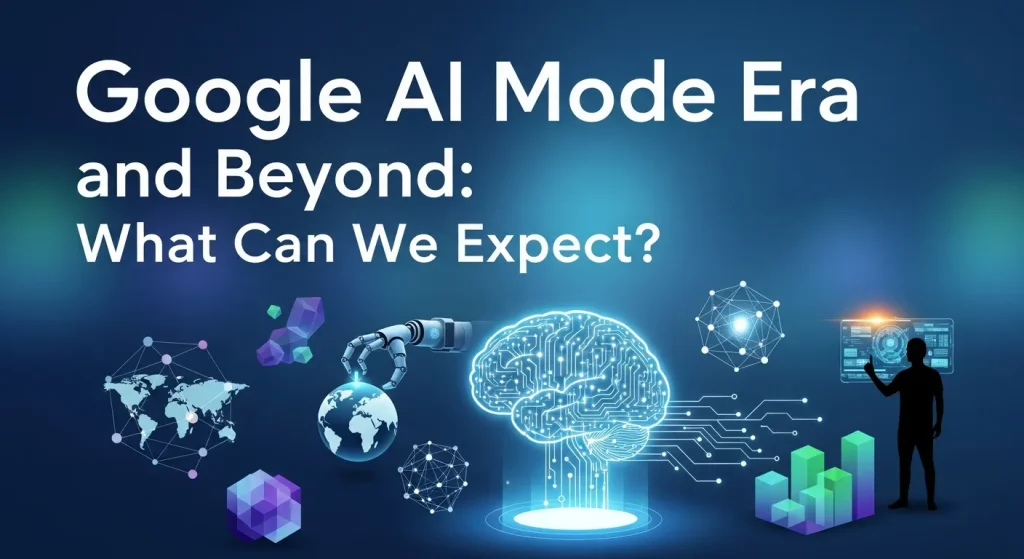
Google AI Mode Era and Beyond: What Can We Expect?
Artificial Intelligence has transitioned from a futuristic concept to the foundational architecture of our daily digital interactions.
The Google AI Mode Era represents a shift from “search and click” to “converse and act.” This article explores what to expect from Google AI Mode, including its impact on SEO, industry-specific transformations, and strategies for creators to thrive in a zero-click, agent-driven environment.
Google AI Mode Era and Beyond: What Can We Expect?
The digital landscape is currently undergoing its most significant metamorphosis since the invention of the hyperlink. We have officially entered the Google AI Mode Era, a period where the search engine is no longer just a librarian but a proactive, multimodal collaborator.
If you are wondering what to expect from Google AI Mode, the answer lies in a world where friction is eliminated, and the “Answer Engine” takes center stage. This guide unmasks the disruptive potential of this technology and provides a roadmap for businesses, bloggers, and marketers to navigate this new reality.
What is Google AI Mode?
Unlike traditional Search or even basic AI Overviews, Google AI Mode is a dedicated, conversational environment. Powered by the Gemini 3 model, it allows users to engage in complex, multi-turn dialogues. Instead of returning “10 blue links,” Google AI Mode synthesizes information from across the web to provide a single, authoritative, and interactive response.
Key capabilities include:
- Query Fan-out: AI Mode can issue up to 16 simultaneous searches to answer one complex prompt.
- Multimodal Input: You can search using text, voice, images, or even live video.
- Agentic Actions: It doesn’t just find information; it can book appointments, manage carts via the Universal Commerce Protocol, and schedule your calendar.
The New SEO: Moving from Ranking to Citation
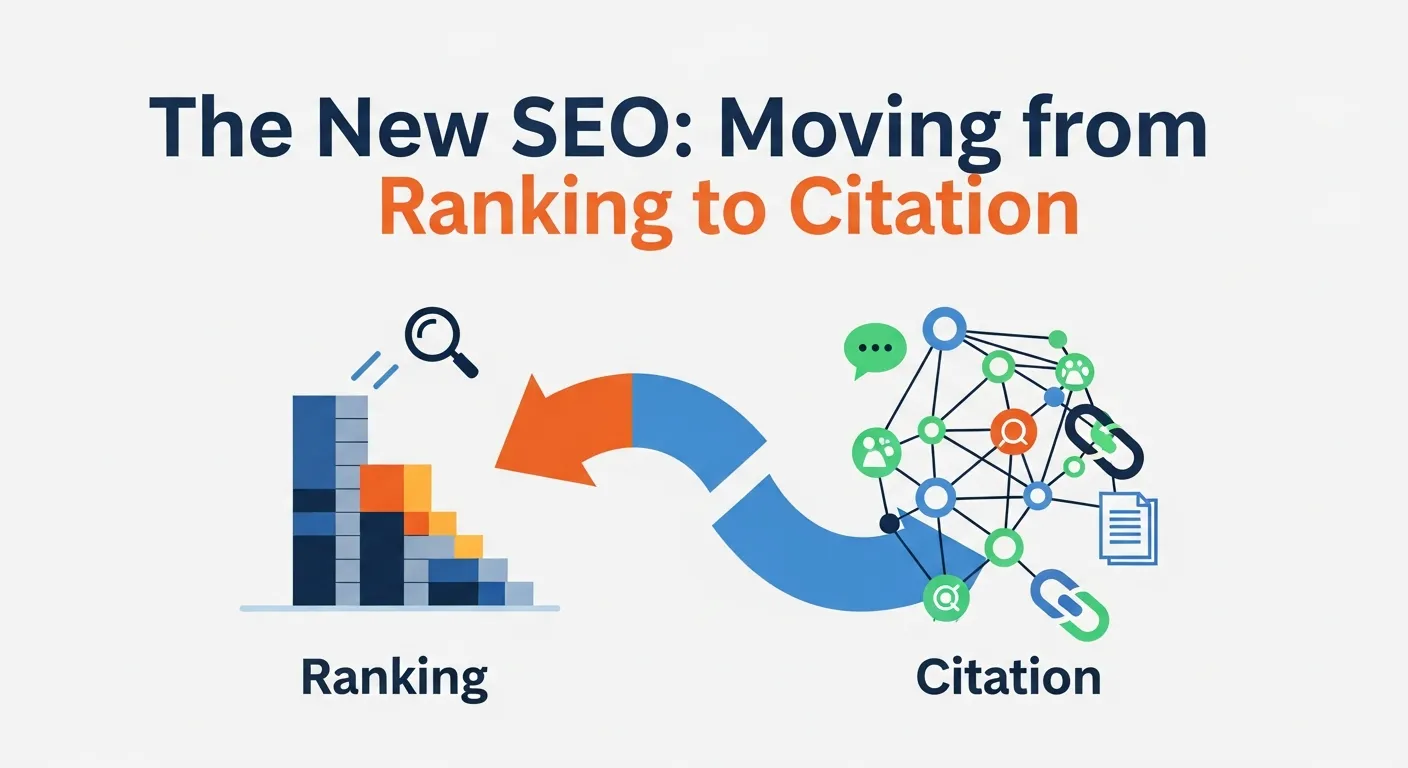
In the Google AI Mode Era, the metric of success is shifting from “ranking #1” to “becoming the cited source.” Data from 2026 suggests that AI Mode sessions have a zero-click rate of nearly 93%. This means users get their answers without ever leaving Google.
How AI Transforms SEO and Content Strategy
To remain visible, you must pivot your strategy toward Answer Engine Optimization (AEO).
- The Answer Capsule Technique: Place a 40–60 word direct answer immediately after your primary H2 headings. This makes it easier for Gemini to extract your content as a snippet.
- Passage-Level Optimization: AI Mode selects specific paragraphs, not whole pages. Every section of your blog must be a “self-contained information hub.”
- Advanced Schema Markup: Beyond basic article schema, use FAQ, Product, and Review schema to give the AI structured data it can trust.
- Semantic Clustering: Focus on a “niche” and build topical authority. If you want to know how to choose a profitable blog, the secret in 2026 is becoming the undisputed expert on a micro-topic that AI systems recognize.
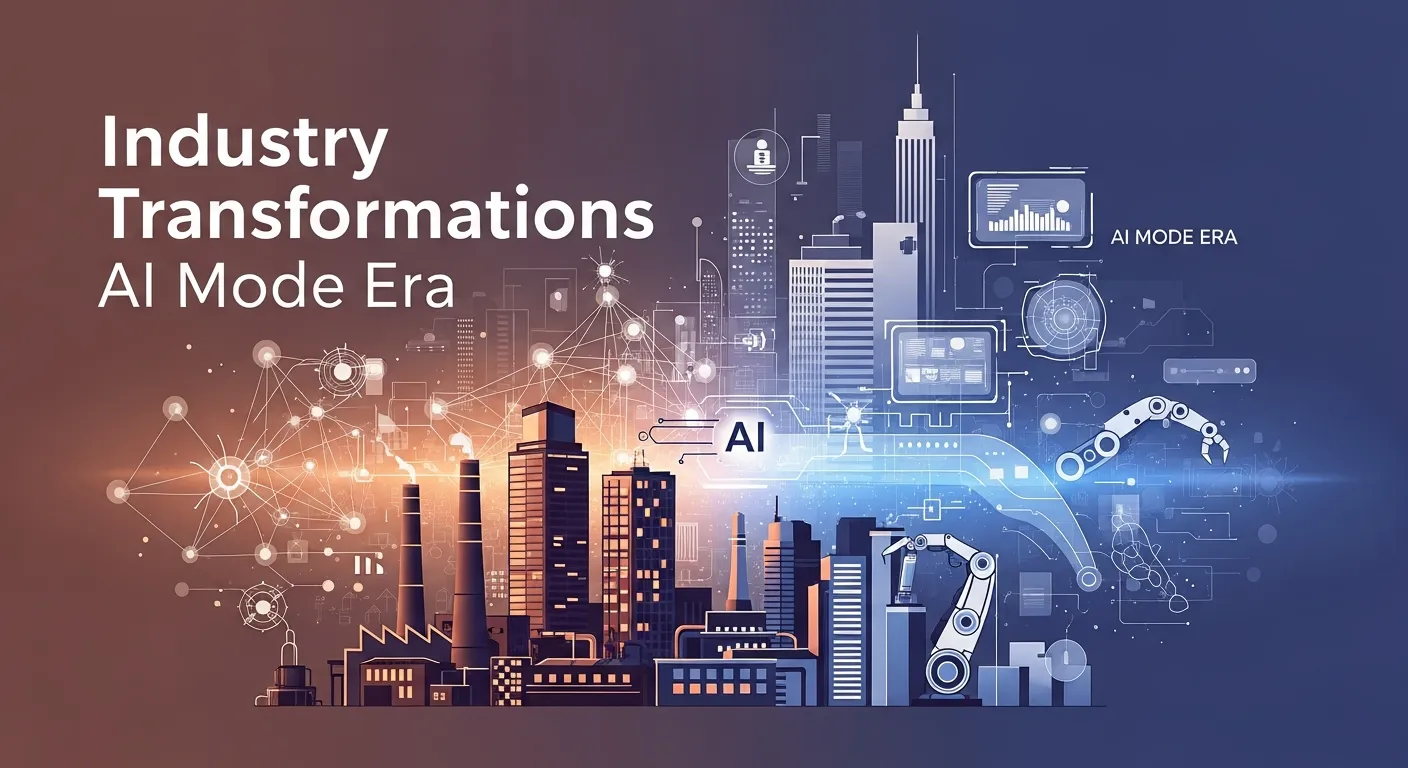
Industry Transformations in the AI Mode Era
1. E-commerce: From Browsing to Buying
E-commerce is seeing a radical shift. Google’s AI can now manage the entire customer journey.
- Conversational Shopping: Users ask, “Find me a sustainable leather jacket under $200 that fits a medium build,” and AI Mode presents the products directly.
- Inventory Optimization: AI uses predictive analytics to prevent stock-outs.
- Brand Awareness: In this era, Brand Positioning is everything. If the AI doesn’t “trust” your brand metadata, you won’t appear in the conversational results.
2. Healthcare: Precise and Accessible
In healthcare, AI Mode acts as a bridge between complex medical data and patient understanding.
- Virtual Assistants: Chatbots help with Personal Reputation Management for doctors by handling FAQs and scheduling.
- Data Insights: AI extracts diagnostic recommendations, making healthcare smarter and faster.
- E-E-A-T is Vital: For “Your Money Your Life” (YMYL) topics, Google requires higher levels of Expertise, Authoritativeness, and Trustworthiness.
3. Marketing & Content Generation
Marketers are leveraging AI writing tools for bloggers to scale production without losing the human touch.
- Outbound Marketing: AI now personalizes Outbound Email Marketing at scale, ensuring your message lands when the user is most likely to engage.
- Trend Marketing AI Data Strategy: Real-time trend forecasting allows brands to go viral on platforms like TikTok by predicting what will trend 48 hours in advance.
Strategic Comparison: Traditional vs. AI-Driven Digital Experience
| Feature | Traditional Digital Era | Google AI Mode Era (2026) |
| Search Intent | Keyword Matching | Contextual & Semantic Understanding |
| User Journey | Click-through to Website | In-platform Resolution (Zero-click) |
| Content Goal | Page Views & Ad Impressions | Citations & Brand Authority |
| SEO Focus | Backlinks & Keywords | E-E-A-T & Structured Data |
| Shopping | Search -> Site -> Checkout | “Agentic” Buying (Universal Protocol) |
Actionable Tips for Creators and Businesses
If you want to stay ahead in the Google AI Mode Era, follow these Smart Blogging Strategies:
- How to Optimize Blog Posts: Use clear, declarative sentences. Avoid fluff. AI prefers data-rich, “citable” content.
- How to Promote Blog Content: Don’t rely solely on Google. Use Social Media Management and Influencer Marketing Services to build brand signals that AI picks up elsewhere.
- How to Improve Blog Page Speed: AI systems favor fast, accessible content. Optimize your Core Web Vitals.
- Digital Reputation Management: Ensure your brand voice is consistent across Wikipedia, LinkedIn, and guest posts. AI looks for a “Brand Personality” to verify your legitimacy.
Agentic Commerce: How AI Mode Closes the Loop
One of the most disruptive features of the Google AI Mode Era is the introduction of the Universal Commerce Protocol (UCP). In 2026, the search interface is no longer the top of the funnel—it is the entire funnel.
- Direct-to-AI Transactions: Users can now browse, compare, and pay directly within the AI Mode interface.
- Hyper-Personalized Incentives: Brands can offer “Direct Offers” tailored to a user’s specific conversation history.
- Predictive Shopping: Expect AI Mode to anticipate when you are running low on household essentials, offering to “reorder via Search” before you even realize you’re out.
Building Brand Resilience in an AI-First World
As clicks decrease, Brand Awareness and Brand Equity become the new primary currencies.
- Digital Reputation Management: Since the AI “summarizes” your brand, ensuring a positive digital footprint is critical.
- Co-Branding in Marketing: Collaborating with established authorities can help “anchor” your brand in the AI’s Knowledge Graph.
- Brand Voice Strategy: A consistent, authoritative voice helps the AI identify your content as high-quality E-E-A-T (Experience, Expertise, Authoritativeness, and Trustworthiness).
The “Zero-Click” Strategy: Capturing Value Without Traffic
If users aren’t clicking, how do you make money? What to expect from Google AI Mode is a shift toward Direct-to-Consumer (DTC) AI Engagement.
- In-AI Lead Gen: Use specialized schemas to allow users to sign up for newsletters or request quotes directly inside the search result.
- Brand Recall: Even if a user doesn’t click, being cited as the “Expert Source” by Google builds massive brand trust for future offline or direct-type transactions.
Agentic Search & The Universal Commerce Protocol: Beyond Information
When considering what to expect from Google AI Mode, the most significant shift is the transition from “Searching” to “Doing.” In 2026, Google has moved beyond being a librarian to becoming a “Super Agent.” This is largely powered by the Universal Commerce Protocol (UCP), an open standard that allows AI agents to execute transactions on behalf of users.
In this stage of the Google AI Mode Era, a user doesn’t just look for “best noise-canceling headphones.” Instead, they engage in a multi-step workflow:
- The Decision Phase: AI Mode analyzes the user’s past purchases in Gmail and reviews in YouTube to suggest three options that fit their specific “Brand Perception.”
- The Execution Phase: Through UCP integration with retailers like Wayfair and Walmart, the user can say, “Buy the second option using my saved card,” and the transaction is completed without the user ever visiting a third-party website.
- The Implications: For businesses, this means your Digital Payment Solution and product data must be perfectly synchronized with the Google Merchant Center. Failure to do so means you are invisible to the AI’s purchasing logic.
Future Opportunities in the Google AI Mode Era
The next 24 months will provide unprecedented opportunities for those who move fast.
Opportunity 1: AI-Native Content Creation
Creators who use AI writing tools for bloggers not just for speed, but for Semantic Clustering, will dominate. By identifying a “profitable niche” and saturating it with interlinked, data-backed content, you become an “unignorable entity” for the AI.
Opportunity 2: Predictive Trend Marketing
Leveraging AI-Driven Trend Forecasting allows brands to identify viral content patterns before they peak. By aligning your Brand Positioning Strategy with these micro-trends, you can secure “Top-of-Conversation” status in AI Mode.
Opportunity 3: Multi-Platform “Search Everywhere” Optimization
The Google AI Mode Era isn’t just about Google. Your brand must be optimized for TikTok, YouTube, and specialized AI assistants like Gemini and Perplexity. This “Omni-Search” approach ensures that no matter where the AI gathers data, it finds you.
Comparison Table: 2024 vs. 2026 Search Experience
| Feature | Traditional Search (2024) | Google AI Mode Era (2026) |
| User Intent | Keyword matching | Multi-step reasoning |
| Primary Goal | Clicks to website | Action/Transaction in-platform |
| Success Metric | Search Rank (1-10) | Citation & Brand Trust |
| Content Format | Long-form articles | Modular, “citable” snippets |
| Commerce | Referral to store | Universal Commerce Protocol (Direct) |
Conclusion
The Google AI Mode Era is not a threat to those who adapt. By focusing on Brand Authority, Answer Engine Optimization, and Semantic Relevance, you can ensure your voice is the one Google cites. The future of digital experience is conversational, personalized, and intelligent—embrace it to secure your competitive advantage.
FAQs
1. What is the difference between AI Overviews and AI Mode?
AI Overviews provide a quick summary at the top of standard search results. AI Mode is a separate, fully conversational tab (or accessible via google.com/aimode) designed for deep research, multi-turn follow-ups, and interactive tasks.
2. Will Google AI Mode kill website traffic?
It will likely reduce click-through rates (CTR) for simple queries (zero-click searches). However, traffic that does click through is often more “qualified” and ready to convert, as the user has already been primed by the AI conversation.
3. How can I get my blog cited in Google AI Mode?
Focus on high E-E-A-T content, use “Answer Capsules” (direct 40-60 word summaries), implement JSON-LD schema, and ensure your site is technically sound with fast loading speeds.
4. Is keyword research still relevant in the AI Mode Era?
Yes, but the focus has shifted to Intent Clusters and Long-tail Conversational Phrases. Instead of “SEO tips,” you should optimize for “How can I improve my website’s visibility in Google’s conversational AI?”
5. How does AI Mode impact Local SEO?
AI Mode heavily relies on the Google Business Profile. Maintaining accurate NAP (Name, Address, Phone) data and gathering high-quality reviews is essential for appearing in local conversational recommendations.
6. Can AI Mode help with e-commerce transactions?
Yes. Through the Universal Commerce Protocol, AI Mode can find products, compare prices, and help a user complete a purchase without them ever navigating to a traditional storefront.
7. Do I need specialized “AI SEO” services?
Traditional SEO fundamentals still matter, but investing in AEO (Answer Engine Optimization) and Digital Reputation Management is becoming a mandatory new investment for 2026.
8. What role does “Brand Voice” play in AI results?
AI models are trained to recognize a consistent Brand Voice. If your brand’s messaging is fragmented across different platforms, the AI may find it less “trustworthy” and skip it in favor of a more consistent competitor.
9. Is human-written content still preferred?
Google prioritizes “Helpful Content.” While you can use AI writing tools for outlining, the “Experience” (the first ‘E’ in E-E-A-T) must be human. First-hand accounts, original research, and unique insights are the best way to get cited.
10. How do I measure success if clicks are going down?
Shift your KPIs. Track Brand Mentions in AI outputs, Share of Model (how often an LLM recommends you), and Assisted Conversions where the journey started in AI Mode.