
The Ultimate Guide to SEO Content Strategy for Marketing Agencies
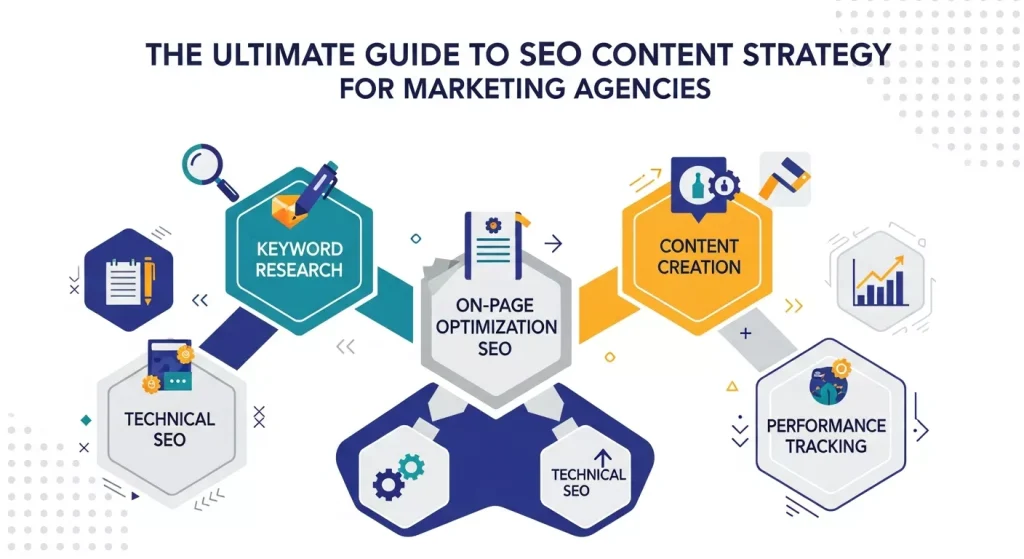
Marketing agencies need a structured SEO content strategy to attract qualified leads, build authority, and improve organic traffic through targeted topics, keyword research, content clusters, and optimized blog publishing.
Many marketing agencies spend all their energy building incredible campaigns for their clients. They craft meticulous editorial calendars, conduct extensive keyword research, and track analytics obsessively. Yet, when it comes to their own websites, the blog sits abandoned. Publishing an occasional company update or a hastily written opinion piece will not drive meaningful traffic. You need a dedicated SEO content strategy to attract qualified leads and establish industry authority.
Creating content for a marketing agency requires a specific approach. Your target audience consists of savvy business owners, marketing directors, and founders who already understand the basics. They are actively searching for advanced solutions, reliable partners, and fresh perspectives. If your agency’s blog can answer their specific questions, you position your team as the natural choice for their next major project.
Why Your Marketing Agency Needs a Documented Content Strategy
Publishing random articles without a clear plan wastes valuable time and resources. A documented content strategy gives your marketing efforts direction and purpose. It aligns your blog output with your broader business goals, ensuring every piece of content serves a specific function in your sales funnel.
Agencies with a clear strategy generate significantly more organic traffic. Search engines favor websites that consistently publish high-quality, relevant information. When you target specific keywords related to your services, you build thematic authority. Google begins to recognize your website as a trusted source for information about digital marketing, SEO, social media management, or whichever niches you specialize in.
A strategic approach also improves lead quality. By addressing the exact pain points your ideal clients face, you filter out unqualified prospects. A business owner searching for “how to scale enterprise SEO” has a completely different budget and mindset than someone searching for “free SEO tools.” Your content strategy dictates which of those users you attract.
How to Generate High-Converting Blog Topics

Finding the right marketing agency blog topics can feel overwhelming. Staring at a blank screen often leads to writer’s block. To build a sustainable content engine, you need reliable methods for generating topic ideas that actually drive business.
Solving Client Pain Points
Your sales team and account managers are your best sources of content inspiration. They speak with clients daily and hear their exact frustrations. Turn these recurring questions into comprehensive blog posts. If three different prospects ask how long it takes to see results from a PR campaign, you should write a detailed article explaining that exact timeline.
Addressing these pain points builds immediate trust. It shows potential clients that you understand their struggles and possess the expertise to solve them.
Leveraging Keyword Research Tools
Keyword research removes the guesswork from your content strategy. Tools like Ahrefs, SEMrush, or Ubersuggest reveal exactly what your target audience types into search engines. Look for long-tail keywords with moderate search volume and low competition.
Instead of targeting a highly competitive term like “digital marketing,” focus on specific queries like “digital marketing strategies for SaaS startups” or “how to allocate a B2B marketing budget.” These specific searches indicate high intent. Users making these queries are actively looking for solutions and are much closer to hiring an agency.
Analyzing Competitor Content Gaps
Review the websites of competing marketing agencies. Identify which topics they cover extensively and, more importantly, what they miss. Content gap analysis helps you find opportunities to outrank them.
If a competitor wrote a brief, 500-word overview of email marketing automation, you can create a 2000-word definitive guide with custom graphics, templates, and video examples. Search engines reward comprehensive, highly useful content. By producing a superior resource, you can capture the traffic they are currently leaving on the table.
Top Blog Topic Categories for Marketing Agencies
Structuring your editorial calendar around specific content categories ensures variety and keeps your audience engaged. Here are the most effective topic categories for marketing agencies to utilize.
Educational Guides and How-Tos
Educational content forms the backbone of a successful SEO content strategy. These posts answer questions and provide step-by-step instructions. They attract top-of-funnel traffic and introduce new users to your brand.
Examples of educational topics include:
- How to Conduct a Technical SEO Audit
- The Ultimate Guide to B2B Lead Generation
- How to Set Up Conversion Tracking in Google Analytics 4
Industry News and Trend Analysis
Marketing moves quickly. Algorithm updates, new platform features, and shifting consumer behaviors constantly change the landscape. Providing timely analysis of these changes positions your agency as a forward-thinking leader. Do not just report the news; explain what the news means for your clients’ bottom line.
Examples of trend analysis topics include:
- What the Latest Google Core Update Means for E-commerce
- How Artificial Intelligence is Changing Content Marketing
- The Rise of TikTok Search and How Brands Should Respond
Case Studies and Success Stories
Case studies are bottom-of-funnel content. They provide tangible proof that your agency delivers results. While these posts might not generate massive search volume, they boast incredibly high conversion rates. When writing case studies, focus on the client’s initial problem, the specific strategy you implemented, and the measurable outcomes.
Examples of case study topics include:
- How We Increased Organic Traffic by 300% for a Local Plumber
- The Social Media Strategy That Generated $50k in First-Month Sales
- Revamping a SaaS Onboarding Email Sequence to Reduce Churn
Tool Reviews and Comparisons
Marketers love software tools. Business owners frequently search for comparisons before purchasing expensive subscriptions. Reviewing marketing software drives relevant traffic and allows you to share your team’s technical expertise.
Examples of tool comparison topics include:
- HubSpot vs. Salesforce: Which CRM is Right for Your Mid-Sized Business?
- The 5 Best Keyword Research Tools
- Hootsuite vs. Sprout Social: A Comprehensive Agency Review
Integrating SEO into Your Content Creation Process
Coming up with great marketing agency blog topics is only the first step. To ensure those topics rank well, you must weave SEO best practices into the actual writing process.
On-Page Optimization Best Practices
Every blog post must be optimized for a primary keyword. Place this keyword naturally in the H1 headline, the introductory paragraph, and at least one H2 subheading. Use related secondary keywords throughout the body text to provide context for search engine crawlers.
Internal linking is another crucial element. Link to your service pages and other relevant blog posts. This helps search engines understand the structure of your website and passes authority between your pages. Keep your URLs short, descriptive, and keyword-rich.
Search Intent and Content Formats
Google wants to provide users with the most helpful answer to their query. Understanding search intent is vital. If a user searches for “marketing agency pricing,” they want to see numbers, tables, and transparent cost breakdowns. If they search for “what is a marketing funnel,” they want a conceptual explanation and a diagram.
Always review the current top-ranking pages for your target keyword. Note the format they use. If the top five results are listicles, you should probably write a listicle. Aligning your content format with user intent drastically improves your chances of ranking.
Measuring the Success of Your SEO Content Strategy
You cannot improve what you do not measure. A successful content strategy requires regular performance analysis. Set up Google Analytics and Google Search Console to track your blog’s metrics.
Pay close attention to organic traffic growth over time. Look at which specific blog posts generate the most page views. Monitor the average time on page; a higher time on page indicates that readers find your content engaging and valuable.
Most importantly, track conversions. Monitor how many blog readers sign up for your newsletter, download your lead magnets, or fill out your contact form. Connecting content performance to actual revenue proves the ROI of your blogging efforts and justifies further investment in your SEO content strategy.

Frequently Asked Questions About Agency Content Strategy
1. Why do marketing agencies need an SEO content strategy?
A structured SEO content strategy helps agencies generate consistent organic traffic, attract qualified leads, and build authority in their niche. Without a plan, content becomes random and fails to support business goals or conversions effectively.
2. What makes blog content effective for a marketing agency?
Effective agency blog content targets client pain points, uses keyword research, and provides actionable insights. It should educate decision-makers, demonstrate expertise, and align with services to naturally guide readers toward becoming potential clients.
3. How do agencies find blog topic ideas?
Agencies can find topics by analyzing client questions, using keyword tools like Ahrefs or SEMrush, studying competitor gaps, and reviewing sales team feedback. These methods ensure content matches real search intent and business needs.
4. What is a content cluster strategy?
A content cluster strategy organizes blog posts around one main pillar topic with supporting articles linked internally. This structure improves SEO, strengthens topical authority, and helps search engines better understand website expertise.
5. How does SEO improve agency lead generation?
SEO brings targeted organic traffic from users actively searching for solutions. By ranking for relevant keywords, agencies attract high-intent visitors who are more likely to convert into leads and long-term clients.
6. What role does keyword research play in content strategy?
Keyword research identifies what potential clients are searching for online. It helps agencies choose topics with search demand, low competition, and high intent, ensuring content attracts the right audience consistently.
7. What is thought leadership content?
Thought leadership content includes expert opinions, insights, and predictions about industry trends. It positions an agency as an authority and builds trust with decision-makers looking for strategic marketing partners.
8. How can agencies measure content performance?
Agencies should track organic traffic, keyword rankings, time on page, bounce rate, and conversions. Tools like Google Analytics and Search Console help evaluate which content drives engagement and business results.
9. Why is updating old content important?
Refreshing old content improves rankings by keeping information accurate and relevant. Updated posts often perform better in search results and require less effort than creating entirely new content from scratch.
10. How do lead magnets improve content marketing?
Lead magnets turn blog readers into leads by offering downloadable resources like checklists, templates, or guides. They help capture email addresses and nurture potential clients who are not ready to buy immediately.
Elevate Your Agency’s Content Output
Building a successful SEO content strategy takes patience and discipline. It requires stepping back from client work just long enough to apply those same proven methodologies to your own brand. By focusing on client pain points, conducting thorough keyword research, and maintaining high editorial standards, your blog will transform into a reliable lead generation engine.
Start by auditing your current website. Identify three major questions your ideal clients frequently ask, and map out a comprehensive blog post for each. The sooner you begin publishing optimized content, the sooner you will see compounding returns in organic traffic.