
What Is a Blog Niche? A Guide to Finding Your Focus and Standing Out
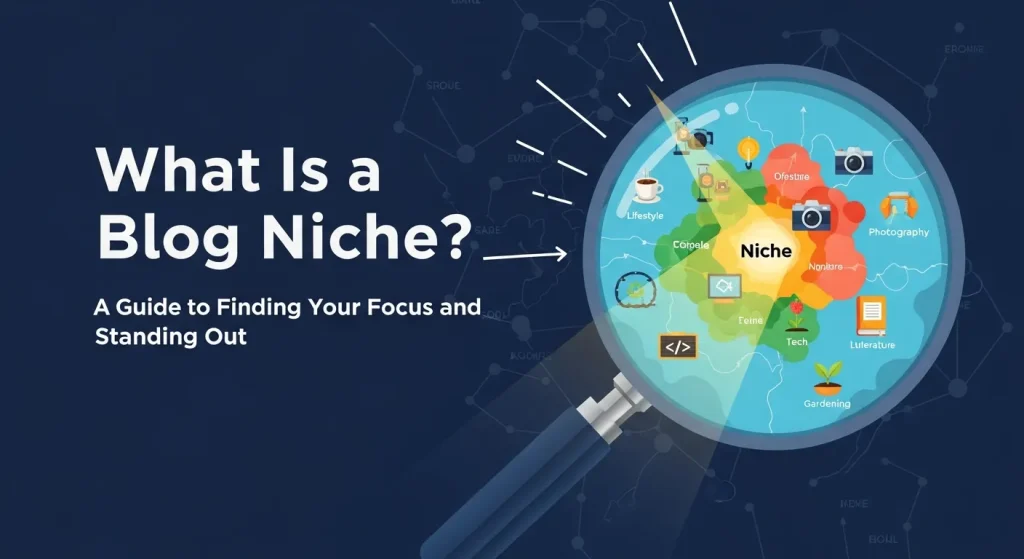
Finding your voice in a crowded digital landscape starts with one question: What is a blog niche? It is the foundation of your authority and the roadmap to professional blogging success.
This guide explores how a specific blog niche differentiates your brand, builds reader trust, and simplifies monetization. We cover market research, brand positioning strategies, and how to transition from a generalist to a high-authority expert in your chosen field.
What Is a Blog Niche?
To understand what is a blog niche, you must look beyond just “topics.” A blog niche is a specialized segment of the market that your content serves. It is the intersection of your unique expertise, specific audience pain points, and market demand. Instead of writing a general lifestyle blog, a niche blogger might focus on “sustainable vegan meal prep for busy college students.”
By narrowing your scope, you stop competing with the entire internet and start leading a specific conversation. This focus is the first step in brand purpose development, ensuring every post you write serves a clear, defined goal.
Why Having a Blog Niche Is Essential for Success
1. Helps You Stand Out Through Brand Positioning
With millions of posts published daily, “general” content gets lost. A well-defined blog niche allows you to implement a brand positioning strategy that carves out a unique identity.
- General: Travel Blog.
- Niche: Solo female travel in Eastern Europe for retirees.
The latter immediately tells a specific audience: “This is for you.” This level of brand awareness is much harder to achieve when your content is scattered across unrelated categories.
2. Builds Authority and Trust
When you focus on a single area, you aren’t just a writer; you become a specialist. According to Wikipedia, niche blogging is highly effective because it facilitates depth over breadth. This expertise leads to building brand authority, making it easier to earn backlinks and social proof. Readers trust Blog B (Student loan repayment) over Blog A (Finance + Gardening) because Blog B demonstrates a mastery of one complex problem.
3. Attracts a Loyal Audience and Enhances User Experience
A niche improves user experience and branding by providing a consistent content journey. If a user arrives for a recipe and the next three posts are about car repairs, they will leave. A consistent blog niche ensures that your customer journey mapping leads the reader from one relevant post to the next, increasing time-on-site and loyalty.
4. Simplifies SEO and Smart Blogging Strategies
Search engines love relevance. By sticking to a blog niche, you naturally build a “topical map.” This makes it easier to:
- Perform YouTube SEO or Amazon SEO if you expand to other platforms.
- Rank for specific long-tail keywords.
- Execute an SEO audit guide on your own content because the keywords are related.
Strategic Comparison: General vs. Niche Blogging
| Feature | General Blogging | Niche Blogging |
| Audience | Broad & Unengaged | Targeted & Loyal |
| SEO Ranking | Very Difficult | Easier for Specific Terms |
| Monetization | Low Conversion (Ads) | High Conversion (Affiliates/Products) |
| Brand Voice | Often Inconsistent | Strong Brand Voice Strategy |
| Authority | Jack of all trades | Industry Expert |
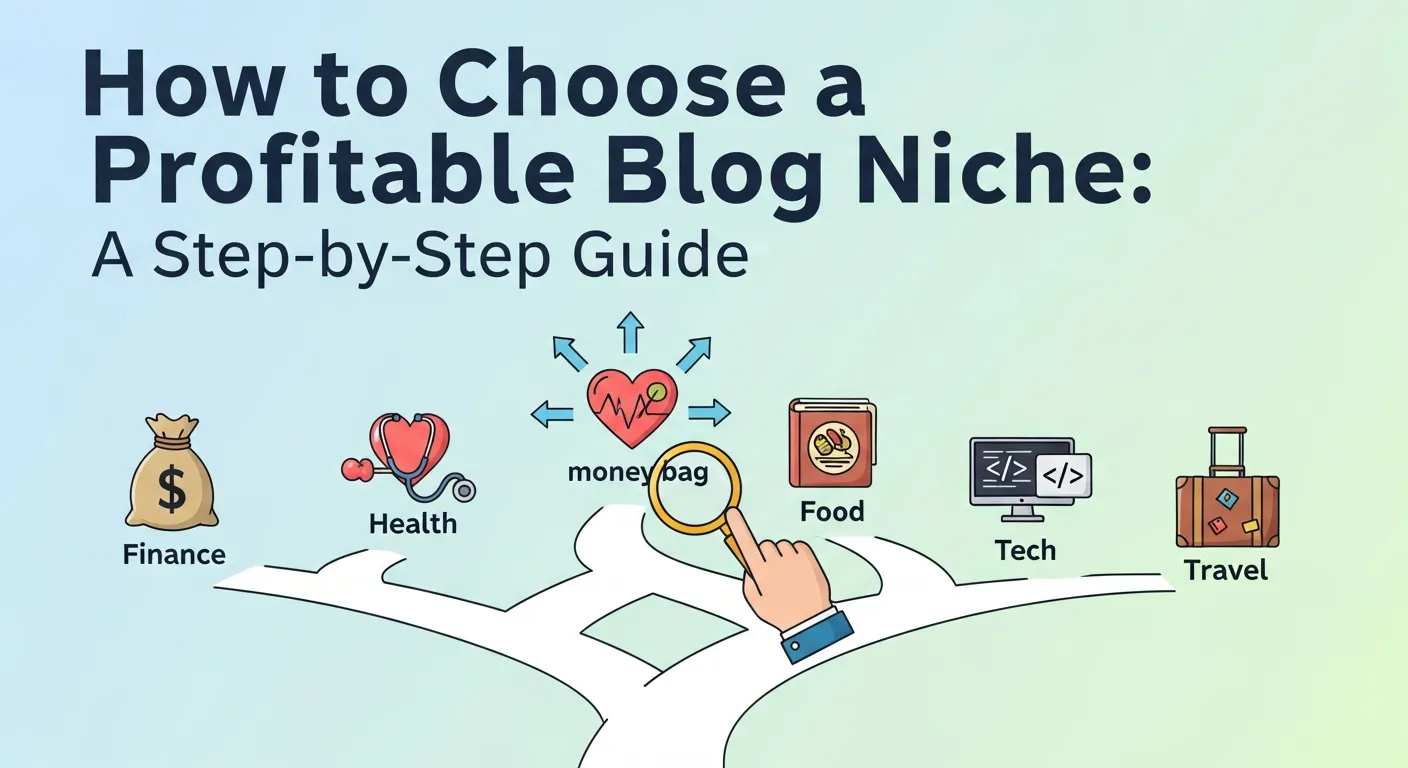
How to Choose a Profitable Blog Niche: A Step-by-Step Guide
Step 1: Identify Your Interests and Skills
Start with a personal brand strategy. What are you passionate about? Smart blogging strategies suggest that you should choose a topic you can write 50+ articles about without burning out. Consider your brand archetypes—are you the “Explorer” providing travel tips, or the “Sage” providing technical tutorials?
Step 2: Research Market Demand and Trends
Passion isn’t enough; you need a market. Use Google Trends and Ahrefs to see if people are searching for your topic.
- Ai Driven Trend Forecasting: Use AI writing tools for bloggers to analyze which sub-topics are rising in popularity.
- Social Listening: Check Reddit or specialized forums to find “gaps” in current content.
Step 3: Analyze the Competition
A competitive brand analysis helps you see what others are doing right—and where they are failing. If the niche is too crowded, look for a “sub-niche.” This is where brand adaptation strategies come in. If “Digital Marketing” is full, focus on “B2B Digital Marketing Strategies for SaaS startups.”
Step 4: Define Your Target Audience
Who are they? Use customer journey mapping to understand their daily struggles. Are they looking for local SEO services, or are they trying to understand digital payment solutions? Your brand personality in marketing should mirror the tone your audience expects.
Step 5: Ensure Monetization Potential
Before committing, ask: How will this make money?
- Affiliate Marketing: Selling tools or products (e.g., workout gear).
- Passive Income Through Blogging: Creating digital courses or e-books.
- Outbound Marketing: Reaching out to brands for sponsored posts.
- Guest Posting Services: Building authority by writing for other niche leaders.
Advanced Growth: Scaling Your Blog Niche

Leveraging AI and Modern SEO
In 2026, how AI transforms SEO is a critical factor for any blog niche. You can use AI to assist in creative content services, but ensure you maintain a human brand voice. Focus on Answer Engine Optimization (AEO) to capture voice search and AI summary snippets.
Performance and Technical SEO
To keep readers on your page, you must improve blog page speed. A slow site ruins your brand perception in marketing. Regularly follow an SEO audit guide to check for broken links and ensure your local SEO services (if applicable) are optimized for your region.
Diversifying Your Reach
Once your niche is established, don’t just wait for traffic.
- Inbound Marketing: Create high-value lead magnets.
- Outbound Email Marketing: Build a newsletter to own your audience.
- Viral Marketing Psychology: Use meme marketing or viral social media campaigns on TikTok to drive awareness back to your niche site.
Common Mistakes to Avoid
- Being Too Broad: You cannot be everything to everyone.
- Neglecting Brand Consistency: Ensure your brand voice is the same on your blog, your SMS marketing, and your LinkedIn.
- Ignoring Data: If your Google Analytics shows one category is outperforming others, be ready to pivot. This is brand resilience strategy in action.
Advanced Brand Strategy: Beyond Simple Niche Selection
Once you understand what is a blog niche, you must apply brand architecture to scale. Successful bloggers in 2026 are moving toward a brand strategy roadmap that treats their blog as the “hub” of a larger ecosystem.
- Brand Voice & Archetypes: Use the brand archetypes framework to ensure your content sounds consistent. Are you the Hero (solving tough tech problems) or the Caregiver (offering parenting advice)?
- Brand Perception In Marketing: Your niche isn’t just a topic; it’s a feeling. Invest in brand purpose development to align your content with ethical values, which is a major driver for Gen Z and Millennial readers.
- Co-Branding Partnerships: Don’t work in a vacuum. Seek co-branding in marketing opportunities with other niche leaders to expand your brand awareness quickly.
The Tech-Forward Blog: AI, AR, and Immersive Content

In 2026, a blog niche is no longer just text. To stay competitive, your smart blogging strategies must incorporate new media:
- Immersive Storytelling: Use VR traffic monetization and AR traffic monetization by creating virtual try-ons or 360-degree tours within your posts.
- Answer Engine Optimization (AEO): Traditional SEO is shifting. You must optimize for “AI agents” that summarize your content. This involves clear, structured data and answering direct questions—a strategy often called Answer Engine Optimization.
- Sonic Branding: As voice search via Alexa and Siri grows, consider sonic branding—a consistent audio intro for your embedded podcasts or video clips that makes your brand instantly recognizable by sound.
Mastering the Modern Marketing Funnel
Promotion has evolved. Relying on organic search alone is no longer enough.
- Viral Content Marketing Strategy: Use the psychology behind viral content—like marketing FOMO (Fear Of Missing Out)—to create “event-style” blog posts.
- Multi-Channel Promotion:
- SMS Marketing & WhatsApp Marketing Services: Send direct updates to your most loyal “super-fans.”
- Outbound Email Marketing: Use outbound email marketing to reach out to industry influencers for interviews, which naturally builds ethical link building opportunities.
- Meme Marketing: Bridge the gap between “professional” and “relatable” by using meme marketing on platforms like TikTok and Instagram to drive traffic to your long-form content.
Monetization 2.0: Diversified Revenue Streams
If your goal is passive income through blogging, you must move past basic display ads.
- Micro-SaaS & Digital Tools: Build a simple tool (like a calculator) related to your niche. This is part of a traditional business model adapted for the web.
- Webinar Sales Funnel: Use creative webinar ideas to sell high-ticket courses. An irresistible webinar offer can convert more readers in 60 minutes than an affiliate link can in a year.
- Digital Reputation Management: As your blog grows, you can offer reputation management or brand monitoring services as a consultant within your specific niche.
Ethical Branding and Sustainability
The “Dark Side of Viral Marketing” has made audiences skeptical. To maintain brand resilience, you must focus on ethical branding.
- Brand Safety In Digital Marketing: Ensure your site is a safe space. Avoid “clickbait” and focus on transparency.
- Brand Longevity Challenges: The biggest threat to a niche blog is becoming obsolete. Combat this with brand adaptation strategies—regularly updating your brand voice and technical stack to stay relevant.
- Cultural Branding: Acknowledge the global nature of the internet. Use cultural branding to ensure your niche content resonates across different regions and demographics.
Future Opportunities: The Next Frontier (2026–2030)
The next five years will be defined by Physical AI and the Longevity Economy.
- Agentic AI Solutions: A massive opportunity exists for blogs that explain how to use “AI agents” for specific tasks (e.g., “AI agents for real estate lead gen”).
- The Silver Economy: As the population ages, niches focused on Elder Tech (AgeTech) and “Biohacking 2.0” (longevity) are projected to see explosive growth.
- B2B Circular Economy: Blogs focusing on sustainability, recycling, and the circular economy will attract high-value B2B advertisers looking for integrated marketing opportunities.
Comparison: Emerging vs. Traditional Niches
| Niche Category | Traditional Focus (2020) | Future Opportunity (2026+) |
| Technology | Gadget Reviews | Agentic AI & Deepfake Defense |
| Health | Weight Loss Tips | Longevity & Cellular Health |
| Marketing | Basic SEO | Answer Engine Optimization (AEO) |
| Finance | Stock Market Basics | Digital Payment & DeFi Solutions |
| Lifestyle | Minimalism | Digital Detox & Mental Fitness |
Conclusion
Selecting a blog niche is the most significant decision you will make as a creator. It defines your brand positioning, dictates your SEO success, and determines your monetization potential. By focusing on a specific audience and solving their unique problems, you transition from a “hobbyist” to a “brand.” Would you like me to help you brainstorm 10 specific sub-niche ideas based on your current interests?
Frequently Asked Questions (FAQs)
1. What is a blog niche exactly?
A blog niche is a specific, focused topic or subject area that your content targets. It helps you speak to a specific audience rather than the general public.
2. Can I have more than one blog niche?
It is generally better to stick to one niche per blog to build brand equity. If you want to cover unrelated topics, consider starting a second site to maintain brand architecture clarity.
3. How do I know if my blog niche is profitable?
Check if there are advertisers in that space. If companies are paying for media buying services or influencer marketing services in that niche, there is money to be made.
4. Is it too late to start a blog niche in 2026?
No. While competition is high, smart blogging strategies like focusing on micro-trend marketing and answer engine optimization allow new bloggers to find “pockets” of untapped traffic.
5. How does a niche help with SEO?
A niche allows you to build “topical authority.” Search engines view you as an expert, making it easier to rank for keywords related to your blog niche compared to a general site.
6. What are some examples of unique blog niches?
Examples include “Urban beekeeping for beginners,” “Cybersecurity for remote seniors,” or “AI-driven productivity for creative writers.”
7. Should I choose a niche based on passion or profit?
The “sweet spot” is the intersection of both. Use brand strategy consulting principles to find where your skills meet a high-demand market.
8. How often should I audit my niche?
Conduct a brand audit every six months. Check your brand equity KPIs and see if your audience’s interests are shifting toward new business trends.
9. How can I promote my niche blog?
Use a mix of inbound marketing (SEO), referral marketing, and social media management. Don’t be afraid of outbound marketing like cold-pitching your articles to industry newsletters.
10. Can AI write my niche blog for me?
While you can use AI writing tools for bloggers to brainstorm and draft, human oversight is essential to maintain a unique brand voice strategy and ensure brand safety in digital marketing.